IWPC 2023 · INTERNATIONAL WOMEN’S PEACE GROUP (IWPG)
2023 International Women’s Peace Conference
The Multidimensional Role of Women for Sustainable Peace
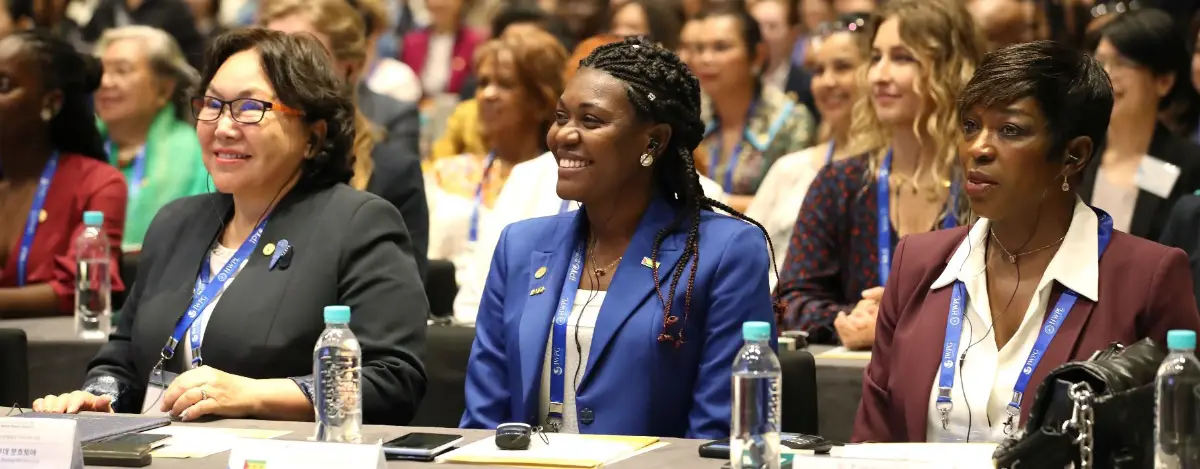
Event Overview
- Title
- 2023 International Women’s Peace Conference
- Subtitle
- The Multidimensional Role of Women for Sustainable Peace
- Host
- IWPG
- Date
- 19 September 2023, 13:30~16:00 (KST)
- Location
- Grand Hyatt Incheon, South Korea
- Participants
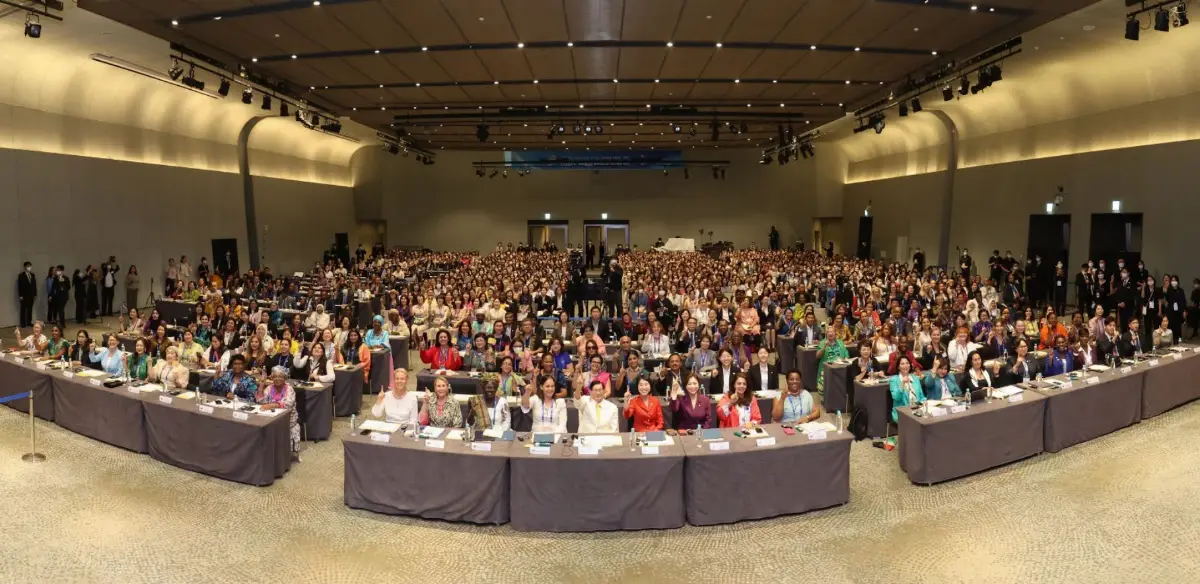
- 51 countries, around 1,010 attendees, including first ladies, current and former ministers, women organization leaders and so on
- Languages
- Korean, English, Mongolian, French, German, Spanish, Arabic, Ukrainian
Background
In 2023, there were conflicts and environmental issues due to the numerous disputes, wars, and conflicts of interests around the world. The International Women’s Peace Conference, which has been held annually on September 19th since 2014 to realize essential and necessary peace in the world, was held on September 19th at the Grand Hyatt in South Korea.
This conference, held as part of the 9th Anniversary of the September 18th HWPL World Peace Summit, was attended by female representatives from various countries, government organizations, non-governmental organizations, and experts. Women from all over the world gathered in one place to discuss the role of women and necessary strategies for realizing sustainable peace, drawing from a principled approach to a practical response. The status of peace education for peace building, propagation of a culture of peace, and the current issues were shared. It was also a time to seek effective ways to contribute to intergovernmental negotiations for legally binding international agreements. For the remaining years of 2023 and the year 2024 to come, for a better world, we hope that women from all walks of life around the world will unite and create actions of peace.
Program · Speeches
Tap an item to view the speaker profile and full speech.
Opening
Opening RemarksMs. Yoon Hyun-sook Former Chairwoman of IWPG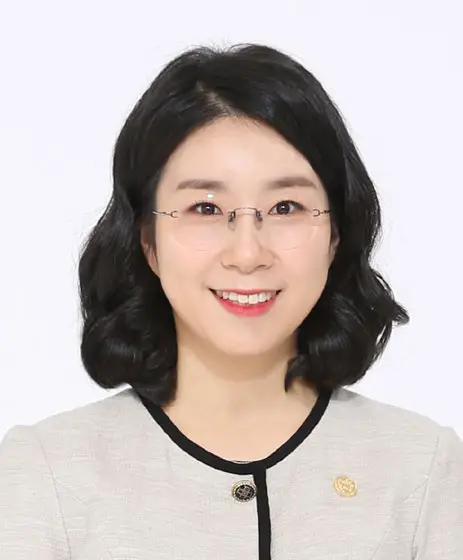
- 2019–presentCommemoration of the April 26th “International Women’s Peace Day” | Lead Coordinator
- 2018–presentUN CSW | Participant
- 2018–2023HWPL World Peace Tours (26th to 32nd)
- 2015–presentSeptember 18th HWPL World Peace Summit | Co-organizer
- 2015–presentCommemoration of the Declaration of World Peace and the Peace Walk | Co-organizer
Greetings,
I am Yoon Hyun-sook, the Chairwoman of IWPG. I would like to express my gratitude to all the peace-loving families who have gathered here in Incheon, Republic of Korea, overcoming the difficult times of the pandemic with unwavering passion for peace. This year marks the 9th anniversary of the September 18th World Peace Summit, and it is also the 10th anniversary of the founding of IWPG, making today’s event even more meaningful. I hope that the 2023 International Women’s Peace Conference, designed to discuss the multifaceted role of women in sustainable peace, will be enriched with your valuable insights.
If there is no peace in the world, our daily lives cease to exist, and everything we have worked for turns into ruins and ashes. Recognizing the limitations of current international law in achieving true peace, it is imperative that we establish a system guaranteeing global sustainable peace. Without such a system, no nation can truly be free from the threat of war. Therefore, we must make every possible effort, mobilizing all means at our disposal, to work towards a worldwide effort to prevent war and secure peace as soon as possible.
IWPG has been actively engaged in various activities to raise awareness of the 10 articles and 38 clauses of the ‘Declaration of Peace and Cessation of War’ (DPCW), proclaimed by HWPL in 2016, to be recognized by women worldwide. We are implementing multifaceted peace projects in collaboration with women all over the world. Today’s conference focuses on education, culture, and institutional aspects, in line with the themes of the three main sessions. We also seek to expand voluntary participation and cooperation through partnerships with women’s organizations and diverse civil society groups.
In today’s conference, we will discuss the role of women in achieving peace in various fields. Building on the achievements we have made so far; how can we exert diverse efforts to achieve peace? We will explore these three areas: education to empower each woman as an agent of peace, cultural approaches to making peace a part of daily life in society and organizations and ensuring the sustainability of peace through institutions. However, planning alone without actual implementation is insufficient. Let us pursue the work of peace with wisdom, patience, and a heart of love. I hope that the lively discussions and sharing taking place at today’s conference will yield results that can be applied to our daily lives as soon as possible. May you and I gain ideas and wisdom for the realization of peace through everything we hear and see here.
It has been seven years since HWPL first proclaimed the ‘Declaration of Peace and Cessation of War’ (DPCW). All women around the world must recall the spirit of peace contained in the DPCW and implement the plans and promises we have made to establish a better order of peace. Let us create the peaceful world we have longed for with our own hands. I am confident that all our efforts, when accumulated and exerted, will cease wars, and achieve sustainable peace in this era. We are one in freedom, love, and peace.
We are one!
Thank you.
Welcoming RemarksMr. Lee Man-hee Chairman of HWPL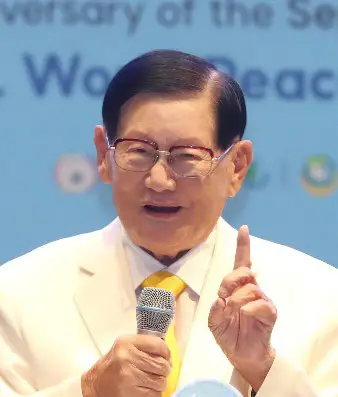
- 2016Proclaimed the Declaration of Peace and Cessation of War (DPCW)
- 2014–presentSeptember 18th HWPL World Peace Summit | Lead Coordinator
- 2014Catholic-Islam Peace Agreement in Mindanao, Philippines and the Peace Walk | Lead Coordinator
- 2013–2023HWPL World Peace Tours (32 Rounds)
- 2013Proclaimed the Declaration of World Peace
- 2010Proclaimed the Declaration of Unification
Hello, everyone. It is nice to meet you. Please be seated.
We have become one under the name of Heavenly Culture, World Peace, Restoration of Light. Right? Yes. When I went overseas, women leaders gathered and gave speeches. I would go there and meet everyone and saw everyone’s faces. And today I see many in attendance and for that I want to say thank you.
Under the title of peace, let us become one in heart. Men, women…peace pertains to everyone. It’s not something that is far-fetched in the future, but it starts from your family, from your school. That is how peace begins to be achieved, right?
For a country, the citizens must do well(follow well) for the President to lead well, right? If the President leads well and there is profit, that profit returns to the people. That is why we need to cooperate well so that the President can lead well, right? For religion, we are trying to fix the things that need to be fixed. Yes. The biggest issue is safety. And so, through peace, we must be safe. This will be done well if you put your efforts from infants to the elders. Everyone needs to become one under peace and one under love. If we do that, wouldn’t this all be successful? There is a saying in Korean, “Come together in one heart for one will.” So, I hope the women here become together in one heart and one will and become a light to the world. In this world of darkness, there are so many complicated things. Therefore, we need to be even bigger in light and come together as one under light. We must not forget this.
The International Women’s Peace Group (IWPG) must become a light in the world and that is how the world will recognize us, wouldn’t they? I know that the Chairwoman visits the UN very often and she leaves a very good impression in her visits. Therefore, I hope IWPG will become an even brighter light.
You have so many numbers compared to us men. So, you must help us. It is said that when God created human, He created both men and women. Therefore, we need to help one another and move so that all things can be done successfully and peacefully.
I will conclude here.
Thank you very much.
Congratulatory RemarksH.E. Maria de Fátima Vila Nova First Lady of Democratic Republic of São Tomé and Príncipe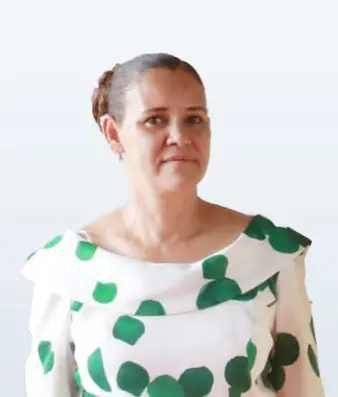
- 2021–presentFirst Lady of Democratic Republic of São Tomé and Príncipe
- 1997–1998The College of Professional Management (CoPm), Jersey, Britain, UK
Ladies and Gentlemen,
I am very pleased to attend the World Summit of the Peace. Indeed, it is with great enthusiasm that l join this event and take the opportunity to address such an amazing audience.
Distinguished participants, please allow me first to thank the organizers you for inviting me, as First Lady of the Democratic Republic of São Tomé and Principe, to participate in this summit. My country and its people are deeply honored by this mark of sympathy and friendship.
Peace is a global and transversal issue, because it involves not only the persons, but also nations. Peace transcends, among other themes, situations of domestic violence, violence based on the gender, poverty, hunger, the consequences of climate change and armed conflicts. It is a fact that circumstances that disturb the peace affect mostly women and children. So, the time has come for us to reverse the position of women on issues of insecurity, conflict and war. Let us work together so that women evolve from victims for peacekeepers and activists against violence, insecurity and against conflicts. Let women occupy high places that allow them to have positive intervention in this matter.
Ladies, wherever you are, make sure of your abilities and skills as educators, heads of families, counselors and peacekeepers, in short, promote peace, because only from it, we will be able to have a better world. Commonly said “Who walks alone may even get there faster, but the one who goes with him will certainly go further.”
So, to conclude, I would like to encourage the International Women’s Peace Group to continue the work they have done for peace and as it is and say: We are one. Count on me and count on São Tomé and Principe for the promotion of Sustainable Peace.
Thank you. God bless you all.
Message 01H.E. Hon. Sara Z. Duterte Vice President of the Philippines, Secretary of Department of Education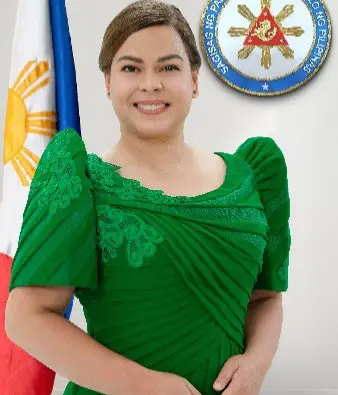
Assalamualaikum (Peace be upon you).
I extend my warmest greetings to the dedicated members and organizers of the International Women’s Peace Group as you conduct the International Women’s Peace Conference.
Your organization continues to be a beacon of hope year after year, uniting women from diverse backgrounds in support of the noble cause of global harmony.
In gathering women leaders, specialists, and advocates for peace from diverse corners of the world, you amplify a powerful message: peace is more than just the absence of war. It is about inclusiveness, equality, and communal growth.
You highlight the transformative potential that women wield in constructing secure, resilient, and inclusive societies by showcasing the distinct viewpoints and roles that women play in fostering dialogue, peaceful conflict resolution, and mutual trust.
May each and every delegate, speaker, and supporter continue to carry on this enthusiasm and energy, and may it cause ripple effects to spread across communities and boundaries. Now, more than ever, the world desperately needs your resilience, resolve, and vision.
Let us combine our resources, magnify our voices, and forge the way toward a future that is peaceful and welcoming to all people.
Lahat-para sa Diyos, sa bayan, at sa bawat pamilyang Pilipino (Everyone-for God, for the nation, and for every Filipino family).
Shukran.
Message 02H.E. Hon. Aawatif Hayar Minister of Solidarity, Social Inclusion, and Family of Morocco
First and foremost, I would like to express my gratitude to everyone for the support extended to the Kingdom of Morocco and for the widespread international sympathy towards our country following the earthquake that struck many regions.
This reflects the significant standing that our nation holds as a symbol of peace and security on the international stage.
I sincerely appreciate the invitation extended to me to attend this highly significant event, which aims to strengthen women’s participation in the peace process and explore ways to establish and develop action plans for their enhanced involvement.
I would like to once again express my thanks to the organizers and all the participants. As we embark on this important international gathering, I wish for its success, hoping that we can overcome all challenges and achieve all objectives. Let us work together, both women and men, to contribute to the betterment of our society by promoting women’s status and advancing their participation. I hope for a future filled with peace and prosperity.
Thank you.
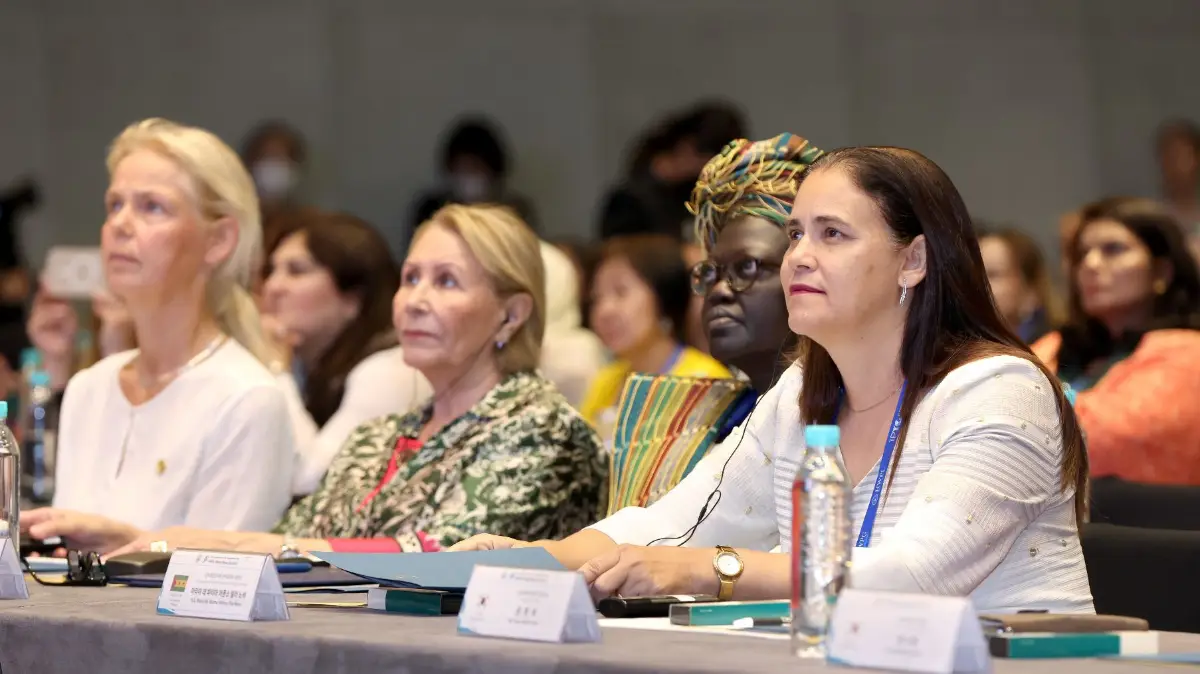
Message 03H.E. Mme. Princia Soafilira Minister of Population, Social Protection and Promotion of Women of Madagascar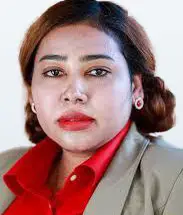
Madam,
The Ministry of Population, Social Protection and the Promotion of Women would like to congratulate the International Women’s Peace Group (IWPG) for organizing the International Women’s Peace Conference as part of the celebration of the 9th anniversary of the World Peace Summit of the international organization Heavenly Culture, World Peace, Restoration of Light (HWPL), from September 18 to 20, 2023, in Seoul, South Korea.
This initiative highlights the role of women and girls in peacekeeping and peacebuilding. Indeed, by taking peace into their own hands, women begin to bring peace to their homes, communities, countries, and the world. Recent estimates indicate that there are some 3.5 billion women in the world. Thus, promoting women’s participation in peacekeeping operations will help to ensure the equal and effective participation of women and men in peacebuilding and security, prevent violence against women and protect the fundamental rights of women and girls, and improve women’s access to justice. Madagascar supports the objectives of these two important events. The Ministry of Population, Social Protection and the Promotion of Women will be honored to participate in order to present the efforts that have already been undertaken to make Malagasy women citizens of peace, and to learn from the experiences of other countries in making Madagascar a nation of peace.
Wishing you every success, please accept, Madam, my best regards.
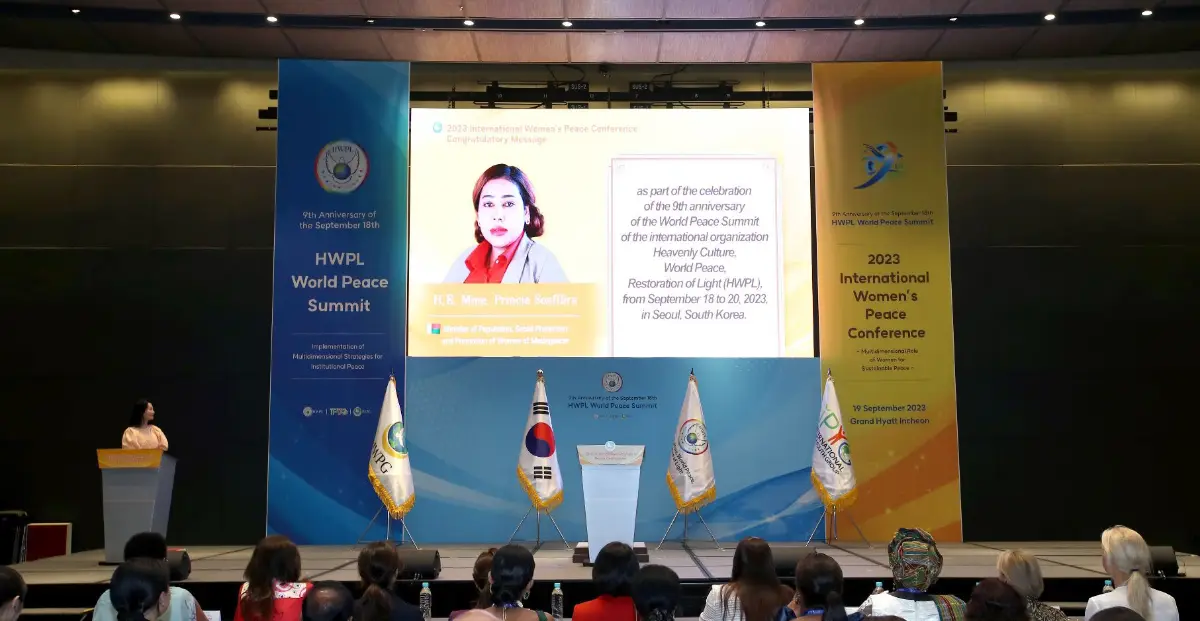
Special SpeechThe Need for Sustainable Peace and Its UrgencyH.E. Hon. Aya Benjamin Libo Warille Minister of Gender, Child and Social Welfare of South Sudan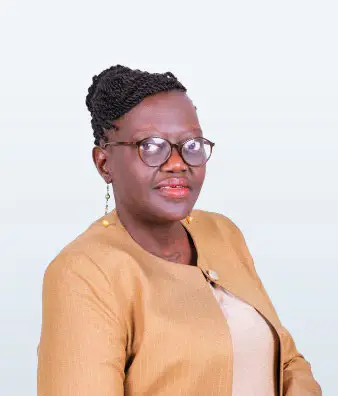
- 2020–presentMinister of Gender, Child and Social Welfare of South Sudan
- 2004–2005Gender Advisor of Vétérinaires Sans Frontières Suisse
Ladies and Gentlemen,
Greetings from South Sudan. It is indeed and honor and a privilege to be speaking at this year’s International Women’s Peace Conference. We gather here to share what we have, ranging from the ideas roaming around in our minds, to our real-world experiences; all towards our visions of a more peaceful world.
As South Sudanese, we have first-hand experience of wars. We know the consequences of conflict. It has broken families, communities, and the initial bustling hope we had as a nation. People are displaced and subjected to violations what have serious effect on their mental health. This can affect the performance of the population if not well addressed; it manifests in every aspect of life and may contribute to cycles of conflict.
I have an experience of losing my husband, disappearing without a trace. I have not buried him and is living with that heavy burden. I am aware that I am not alone, but nobody deserves such a life. I deal a lot with issues of widows and orphans who are left to take care of themselves because their mothers not able to do so. The situation will only bring back conflicts if that many children are not going to school. Despite this we as a people are not defined by that same violence. We as a people and especially our women have been and will continue to be beacons of hope to South Sudan. Today, we got thousands of South Sudanese and Sudanese fleeing from the war in Khartoum, mainly women and children. Sudan has been a place for South Sudanese who fled the war and now they are forcefully returning home. We call upon Khartoum to resort to dialogue to resolve the conflict. We are only adding more pain and suffering to our people.
The peace we all want is not just the lack or absence of war, we do not define something as the lack of something, we define peace by the presence of justice and equality of opportunity for all. As women, I believe and so do you, (I would hope), have the power to rebuild what war has demolished. We tended to wounds, we nurture our children, and we sow the seeds of reconciliation within our borders. With women being given more opportunities we have shown that we can bring fresh perspectives on situations and new ideas for solutions, we are not passive victims, but are active agents of change.
We know through experience that sustainable peace has to be built from the ground up, we know we need to have safe spaces for our people to have dialogue, advocate for education and protection for all within our communities, giving out children a safe and optimal environment to begin building a better future for themselves and the country. Especially our women.
As South Sudanese women, we know that the journey to peace is not an easy one, we will have challenges that will not be easy to overcome, but a nation like ours have a resilient people, we have ideas that will not be stopped by adversity, and we will emerge victorious. And as we gather with women from all over the globe, let us forge connections and share stories so that we can build a peaceful and prosperous world. Thank you.
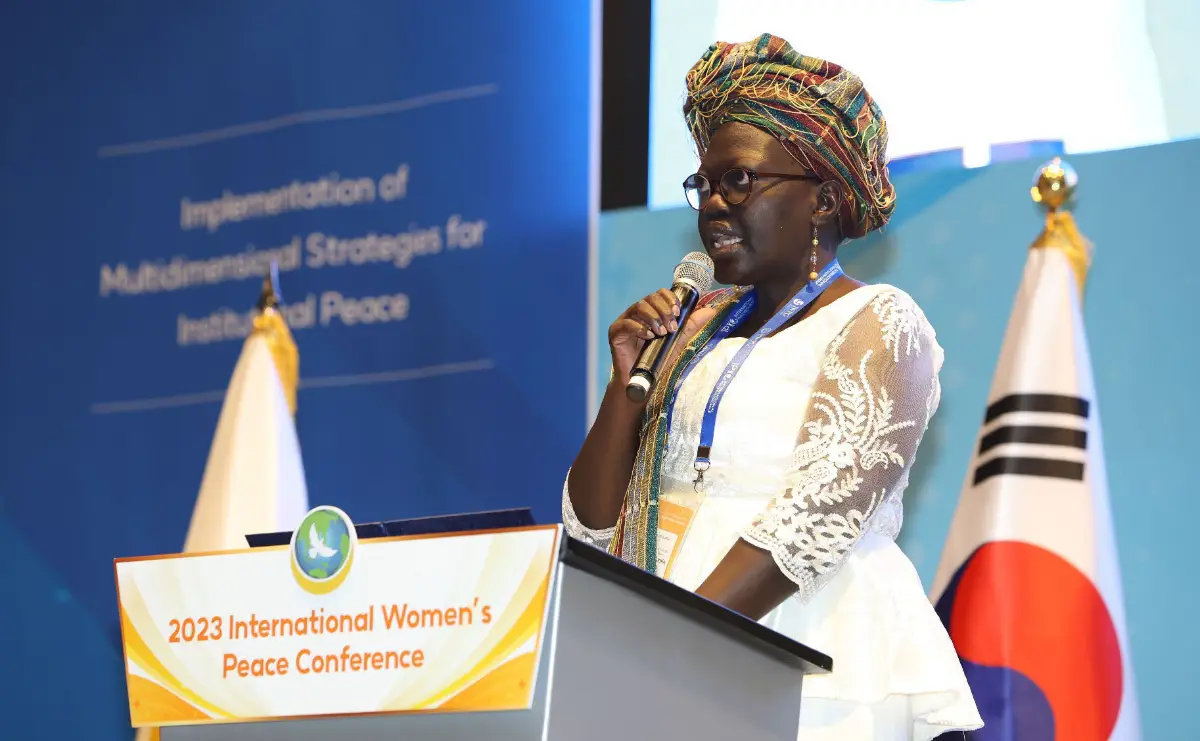
Session 1Peace Education
Speech 01Women’s Peace Education: Importance and OpportunitiesDr. Kadia Maiga Diallo Secretary General of the National Commission of Mali for UNESCO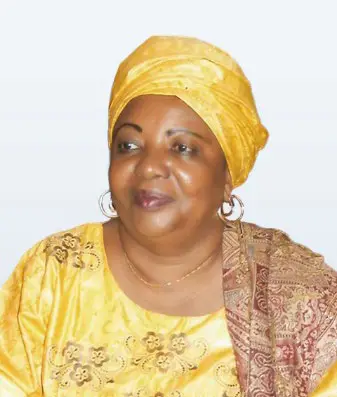
- 2019–presentSecretary General of the Malian National Commission for UNESCO and Islamic Educational, Scientific and Cultural Organization (ISESCO)
- 2007–2019Researcher at the Microbiology and Microbial Biotechnology Research Laboratory (LaboREM-Biotech)
Welcome, everyone to the International Women’s Peace Conference.
I am the Secretary General of the National Commission of Mali for UNESCO, an affiliated organization of the United Nations that focuses on science and education. I am very honored to be here to discuss women’s peace education.
War, chaos, and violence has always existed on the face of this earth, and ever since the global pandemic, women and other vulnerable groups have suffered from even severe violence in the midst of global crisis. Those who have witnessed violence while growing up in a violent environment are easily harmed both emotionally and physically. This suppression hinders the learning capabilities and social productivity of women and girls. This is why we must build peace and prevent conflicts through women’s peace education.
The Constitution of UNESCO clearly states the purpose of peace education in the first sentence. It starts with “Since wars begin in the minds of men, it is in the minds of men that the defenses of peace must be constructed.” Thus, peace starts in the minds of people. Political, economic agreements and treaties between states can only bring peace temporarily. For eternal peace, we need an intellectual, moral foundation on which we must build mutual understanding and knowledge. UNESCO is clearly aware of this.
Johan Galtung, the pioneer of peace education, has said that 3 things, peace education, peace research, and peach activism, must come together to continue to fight against social evil and break through the status quo and reach social change. Peace education is an important element that changes a culture of violence to a culture of peace.
Mali has been going through a period of instability and conflict since 2012, culminating in the occupation of the north by armed groups. Mali is about twice as big as France. Its capital Bamako counts 2,929,373 inhabitants in 2023 due to the insecurity that has caused the population to move from the north to the south and mainly to the capital (375,000 displaced people in Mali).
This context is underpinned by a number of factors, including: the poor understanding of the Peace Agreement by a significant proportion of the population, including women and young people. The extremist influence, the weak presence of the State over a large part of the national territory (the north and central part), the rancor and wounds of previous conflicts, problems of governance, the low level of implication of young people and women in the process of finding appropriate solutions, among others. In a context of generalized insecurity caused by a multitude of crises of various dimensions, characterized by terrorist assaults, which are armed robberies and trafficking of all kinds, fueled by the proliferation of weapons of all calibers over almost 2/3 of the country. All of this significantly impact women and hinder national development. We are fighting to eradicate poverty and conflicts, protect the earth, and guarantee prosperity of mankind.
In aid of the Malian government’s peace education project, FEMACAU has organized educational modules on the culture of peace, social cohesion and conviviality, with the aim of teaching the notions of peace, civic-mindedness and conviviality on a wider scale to young people aged 10 to 20 and community leaders in the commune of Nossombougou, Koulikoro region: 250 young people, including 127 boys and 123 girls, 26 community and religious leaders (mostly men, including village chiefs and their advisors, imams and their staffs) and 4 master theater trainers are trained and equipped in themes linked to social cohesion, cohabitation, non-violent conflict management, the culture of peace, solidarity and so on. 185 home visits were carried out by 5 groups of 50 people (127 boys and 123 girls), reaching 1,199 people. 16 causerie debates and more than a dozen community dialogues were organized with young people and community leaders, at the rate of two talks per weekend in the villages. Micro-projects carried out in the northern regions produce concrete results for the population and defuse local conflicts.
So, this is why we believe that peace education should be part of the national education curriculum. Peace Education has the potential to ultimately change society. Now the youth can embrace new knowledge that includes historical perspectives on the origin of war, ways to prevent war, evolution toward research on violence in all forms, ways to prevent war and mitigate conflicts, and much more. This can help facilitate passion and dedication to peace at an individual and collective level. For this peace to spread, NGOs such as HWPL, IWPG, and IPYG, and civil society and peace education in the community level is needed. We must develop a strong peace education program that facilitates a peaceful, just, and sustainable society that guarantees a bright future for the future generation. In particular, to root out the fundamental cause of various forms of structural violence against women and girls, peace education must be at the foundation.
Thus, simply “a world without war” is not enough. We must understand that peace means “a state of justice, equality, and partiality, where everyone enjoys dignity and respect,” and must work toward that goal.
Thank you very much.
Speech 02Empowering the Future: Women’s Peace Education in a Changing WorldMs. Néziha Labidi Former Minister for the Women, Family, Children and Seniors of Tunisia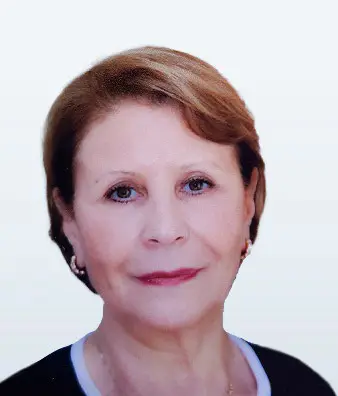
- CurrentPresident of the Think-Tank IPASSS
- CurrentAmbassador for Peace at the Office of the High Commissioner for Human Rights
As lama, hello, AN-NYEONG-HA-SE-YO, Ladies and Gentlemen, First of all, I would like to express my sincere thanks to Mr. Lee Man-hee Lee, Chairman of HWPL, Heavenly Culture, World Peace, Restoration of Light.
I would also like to thank Ms. Hyun Sook Yoon, Chairwoman of IWPG, for her kind invitation to take part in the Commemoration of the 9th World Peace Summit. I congratulate you for organizing this high-level conference.
I’m from Tunisia, a small country in North Africa with an immensely rich 3,000-year history. Tunisia is renowned to be one of the countries where women’s human rights are respected. In fact, in 850 BC, Queen Dido or Alyssa founded Carthage, the first republic, and wrote the oldest constitution according to the philosopher Socrates. In 735 of our era, it was once again a woman, the Muslim princess Aroua, the Kairouanese, who abolished polygamy and instituted the marriage contract known as the Kairouanese contract. In 1956, the late Habib Bourguiba, founder of modern Tunisia, promulgated the Personal Status Code, which reorganized family relations, abolished polygamy and introduced judicial divorce. This code was amended several times. In 1992, article 23, which stipulated obedience to the husband, was replaced by the notion of mutual respect and gave mothers the right of guardianship, tending towards equality between men and women. Since then, a succession of amendments has been made, such as granting Tunisian mothers’ children Tunisian nationality and repealing Circular 73 to allow Tunisian women to marry non-Muslims without having to convert to Islam. In July 2017, Law 58 to fight violence against women was passed unanimously. Raising the age of sexual consent from 13 to 16 and introducing political violence were new challenges that were met. Mechanisms for applying the law, such as the green line, the observatory to combat violence, the shelters and the economic empowerment of women, have been created.
However, despite these efforts, there is still a long way to go to establish new behaviors and a new culture of respect for human dignity. I believe that it is more intelligent to recognize the right of each culture and civilization to respect its values without prejudice, while having the universal values of human rights as a common denominator. For his part, Claude Levi Strauss “considers the humanist relativism that places the fundamental needs of the human being above all beliefs and cultures, women’s rights, children’s rights and the absence of discrimination”.
Ladies and Gentlemen, we come from different backgrounds, but we share a common concern: As women leaders, we should provide solutions to problems such as the lack of security and stability, pandemics, natural disasters and violence against women, children and the elderly – all these vulnerable groups who are used as weapons of war, as shields and forcibly recruited into armed conflicts that are eating away at our respective societies. Addressing the issue of peace and security is at the very heart of all development and respect for human rights. There can be no human life without dignity. When women participate in peace negotiations, the resulting agreements have a 35% chance of lasting at least 15 years.
Spinoza considered that “peace is not the absence of war, it is a virtue, a state of mind, a will to benevolence, trust and justice.”
Ladies and Gentlemen, we will be celebrating the 23rd anniversary of Security Council Resolution 1325 on women, peace, and security, in October we will be marking the 16 days of activism to combat violence against women; and we are on the threshold of the celebration of International Human Rights Day. These are moments to reflect on and take a step back from our daily lives and the lives of people suffering from exodus, famine, all kinds of wars, and stateless people wandering here and there without roots or wings.
In addition to the various conferences and platforms, we are looking for new approaches to achieving greater gender equity, and so we find ourselves faced with feminist diplomacy, a concept that originated in Sweden with former foreign affairs minister Margot Wallstrom and is still in its infancy. The global context supports this drive for peace and security in order to achieve the 2030 goals in connection with the AU 2063 agenda. AU 2063 places a significant emphasis on achieving a peaceful and secure Africa and harnessing the potential of women. In particular, according to Goal 17, empowering women and girls and eradicating violence and discrimination against them should be prioritized, and full gender equality should be achieved in all aspects of life. Women’s peace education is a crucial means to teach women and girls about their rights and how to protect them, providing them with the essential foundation to become integral members of society and leaders.
As mentioned earlier, much like Spinoza’s definition of peace, peace emerges from within a person’s heart, and to achieve it, the teaching of peace seeds in their hearts should take precedence. Universal education in human rights requires the promotion of feminist diplomacy that fights against all forms of religious, cultural or political relativism, so we must accept and respect the diversity of histories and social practices.
My thoughts go out to the two Syrian brothers, athletes who were reunited after so many years apart at the 2021 Olympic Games in Tokyo. My thoughts are also with all the families separated on both sides of the demarcation line. I am also watching with great interest the resolution of the conflict between Egypt and Ethiopia, a country led by a woman.
My thoughts are with the children, the “comfort” women who are fighting to regain their dignity, the Yazidites held hostage by Daesh, the children in Palestine and elsewhere, the homeless children who wander around with no identity, no memories, no roots and no wings, no doubt, to fly. I call on the universal conscience to speak with one voice, the voice of women and men who want a world based on love, respect and acceptance of others.
Together, we got out in peace against war.
Thank you for your attention, Gam-Sa-Hap-N-Da-.
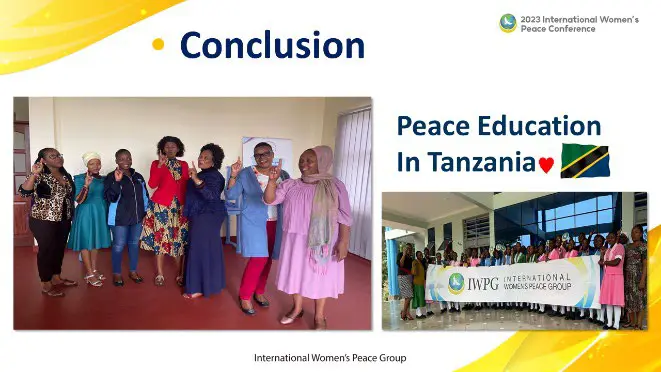
Speech 03Women’s Peace Education: Changes in Tanzania caused by PLTEMs. Lilian Benedict Msaki Public Health Specialist at Christian Social Service Commissions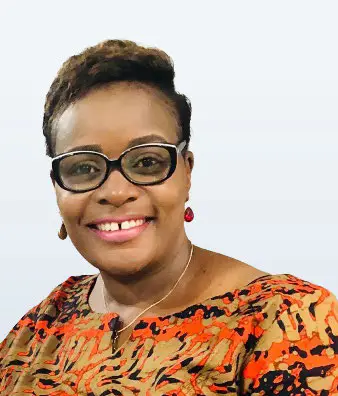
- 2017Master of Public Health (MPH) at Muhimbili University of Health and Allied Sciences (MUHAS)
- 2015Health Leadership and Management MBA at United States International University-Africa (USIU)
Dear distinguished guests, IWPG chairwoman, Secretary-General, board members, committee members, IWPG members, representatives from around the world, greetings to you all!
It is an honor for me to be attending the 2023 International Women’s Peace Conference. My name is Lillian Msaki, and I come from Tanzania. I work as Christian Social Service Commissions (CSSC) and a public health specialist in a non-governmental organization in Tanzania.
Today, I am here to introduce the IWPG Peace Lecturer Training Education (PLTE) program, which is designed for adult women to learn and discuss the spirit of peace and how to implement it. PLTE was an amazing education program that helped me discover my inner values, awaken dormant peace cells within me, and transform my thoughts and perspectives through concrete guidance on respecting life and practicing altruism. It became clear to me that this program is groundbreaking, highlighting the infinite potential of women and their essential role in world peace, a knowledge that I believe every woman worldwide should possess.
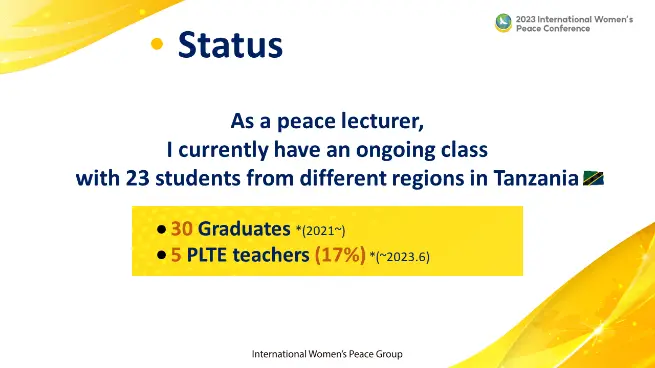
Currently, I hold a Peace Lecturer certification after completing the PLTE course, and I am conducting PLTE lectures for 23 students. In Tanzania, PLTE has been implemented since 2021, and as of 2023, we have graduated over 30 students, with five of us, including myself, obtaining the Peace Lecturer certification. This represents approximately 17% of all PLTE graduates who are qualified to teach.
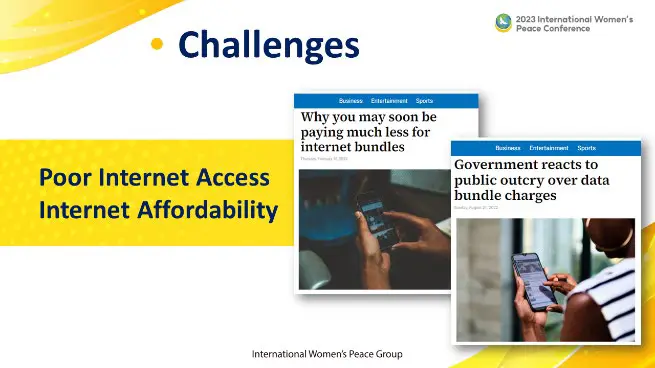
In Tanzania, however, there are challenges that hinder the expansion and certification of PLTE. Some of these challenges have been slow in progress and had limited coverage over the past two years. Firstly, there is the issue of the internet. Reliable internet access is crucial for the success of PLTE, but in many developing countries like Tanzania, internet access is unequal, with urban areas having better infrastructure than rural areas. This inequality affects the expansion of Peace Knowledge to rural and hard-to-reach populations. Paradoxically, those who could benefit the most from education, especially girls and women, are still at risk due to social and cultural issues such as gender-based violence, female genital mutilation, and early pregnancies. Even in urban areas, high data bundle costs make internet accessibility questionable. The government has promised to address this issue, but no decisive action has been taken so far.
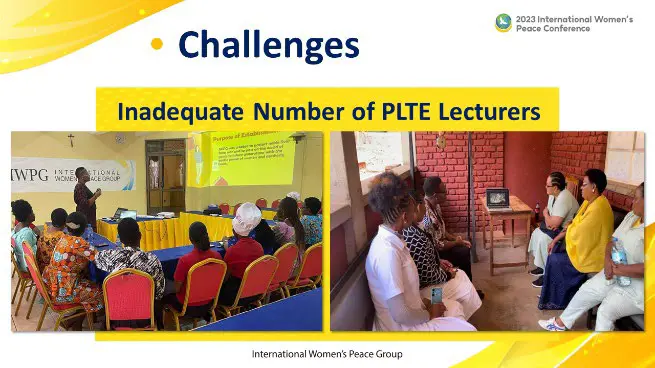
Secondly, a shortage of certified PLTE instructors nationwide has an impact on the scale of education. Consequently, most potential groups, such as university students, remain unaware of IWPG and PLTE. This presents a crucial opportunity for us to explore.
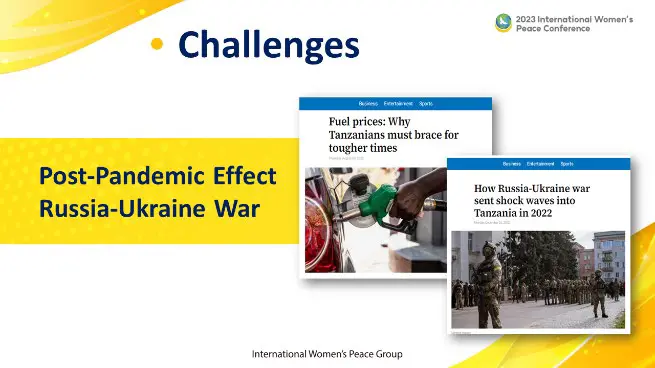
Thirdly, the recent effects of the pandemic and the Russia-Ukraine war contributed significantly to the depreciation of the Tanzanian Shilling against the US Dollar. This has led to increased living costs, unemployment rates, poverty, and socio-economic hardships. Partially, this explains why some graduates may have shifted their priorities, abandoning their certification processes.
However, despite these challenges, my unwavering belief and determination have kept IWPG PLTE going.
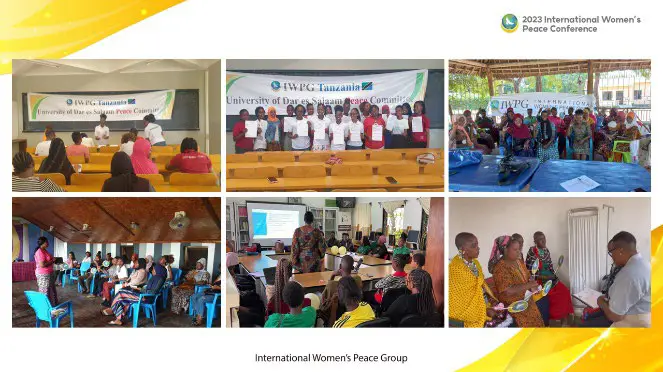
While it may be impractical to immediately build internet infrastructure, it should not deter us from promoting peace. To address this, I plan to create brochures containing PLTE-related materials and personally visit areas with poor internet connectivity to conduct face-to-face lectures. To achieve this, we need to produce more Peace Lecturers who can work tirelessly on the ground. In reality, I have already promoted IWPG and PLTE to over 500 women in regions like Tanga, Mwanza, Kilimanjaro, and Arusha. I even took the initiative to translate PLTE materials into Swahili for distribution where needed. The women I encountered expressed great enthusiasm, showing keen interest in IWPG’s activities and PLTE. They wished for themselves, their children, and even their husbands to participate in this education. Furthermore, I am actively seeking ways to support PLTE candidates who engage in income-generating activities. I plan to secure female representatives in each region among PLTE supporters who can manage internet costs. These representatives will conduct special lectures for all aspiring Peace Lecturers in their respective areas, instilling the vision of PLTE and motivating them to complete the course. We will also seek financial support from the government and partner with developed countries to ensure that internet and material costs do not pose a burden.
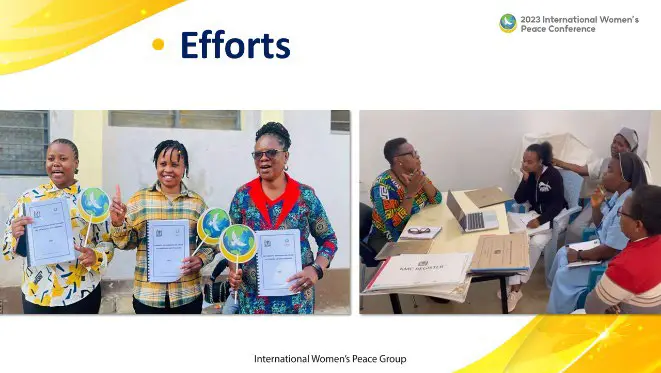
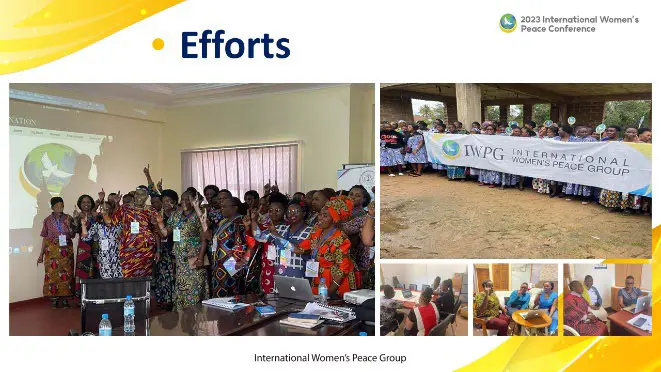
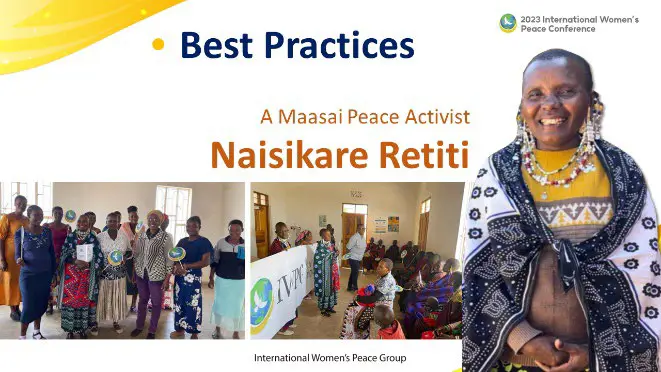
Working for peace in a challenging environment is not easy, especially in places where women’s rights are severely limited. However, the dedication of Naisikare Retiti, a peace activist in the Maasai pastoralist community, serves as a source of inspiration. She lives in a place where women’s rights are deeply suppressed. Despite not knowing English, she endured long waits to obtain Swahili materials and, with the help of PLTE graduates, created translated PLTE lecture materials in booklet form, which she now uses for offline PLTE classes. She travels long distances on motorcycles and on foot to reach remote Maasai settlements, spreading the seeds of peace through continuous collaboration with church groups and the local community. Her dedication is deeply moving and serves as a role model, and through her commitment, Tanzania’s journey towards peace is accelerating.
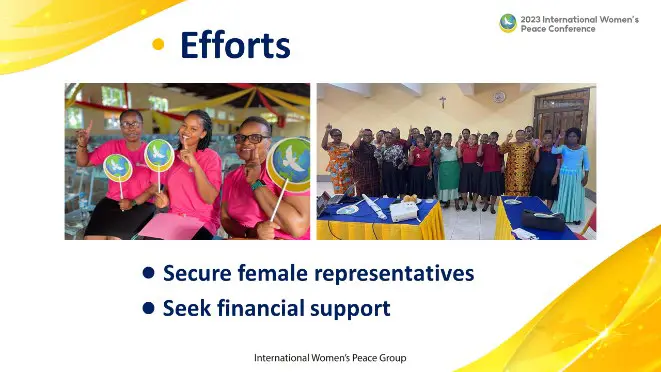
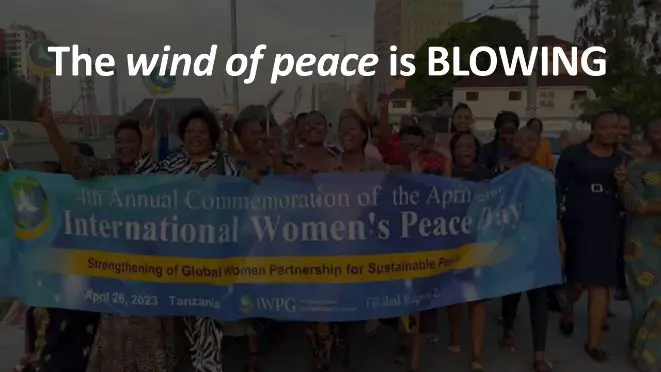
Tanzania is currently experiencing a breeze of peace, and I am extremely excited. Our top priority for achieving significant success in peace education is to collaborate strategically with the Tanzanian government. We are in the final stages of registering IWPG Tanzania Chapter, and IWPG continues to actively engage with local communities, making a real impact. Furthermore, introducing local offline classes and integrating PLTE regular classes into women’s universities will nurture the spirit of peace, drawing a blueprint for the future of peaceful Tanzania. To achieve this, we hope for smooth communication and interest from the government.
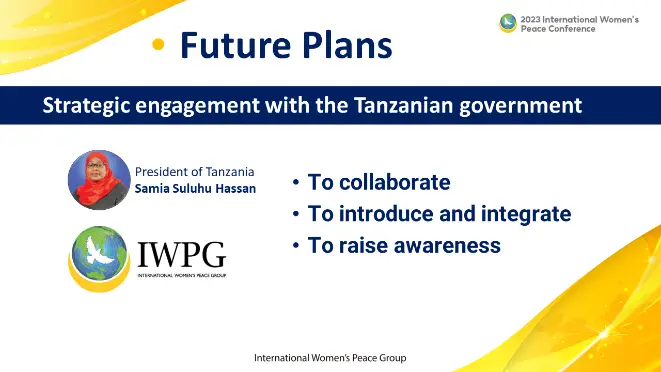
IWPG is working together with us to develop the PLTE program, and we look forward to the government swiftly sharing financial support to activate IWPG’s peace program process throughout Tanzania, preparing the wisdom of the next generation. I will also make every effort to raise awareness of IWPG, PLTE, and DPCW through various community and political gatherings.
In conclusion, dear esteemed guests, IWPG is encouraging and empowering women and children who have endured anger, violence, scarcity, suffering, and psychological torture due to war and other humanitarian issues. As peace knowledge spreads across borders to remote communities, we see women advocating for their rights, and families thriving in peace and harmony, no matter where they are. I commend IWPG for its dedication to global peace, and I consider it a great privilege to be part of the verified Peace Lecturers who are joining this noble mission.
Thank you for your attention.
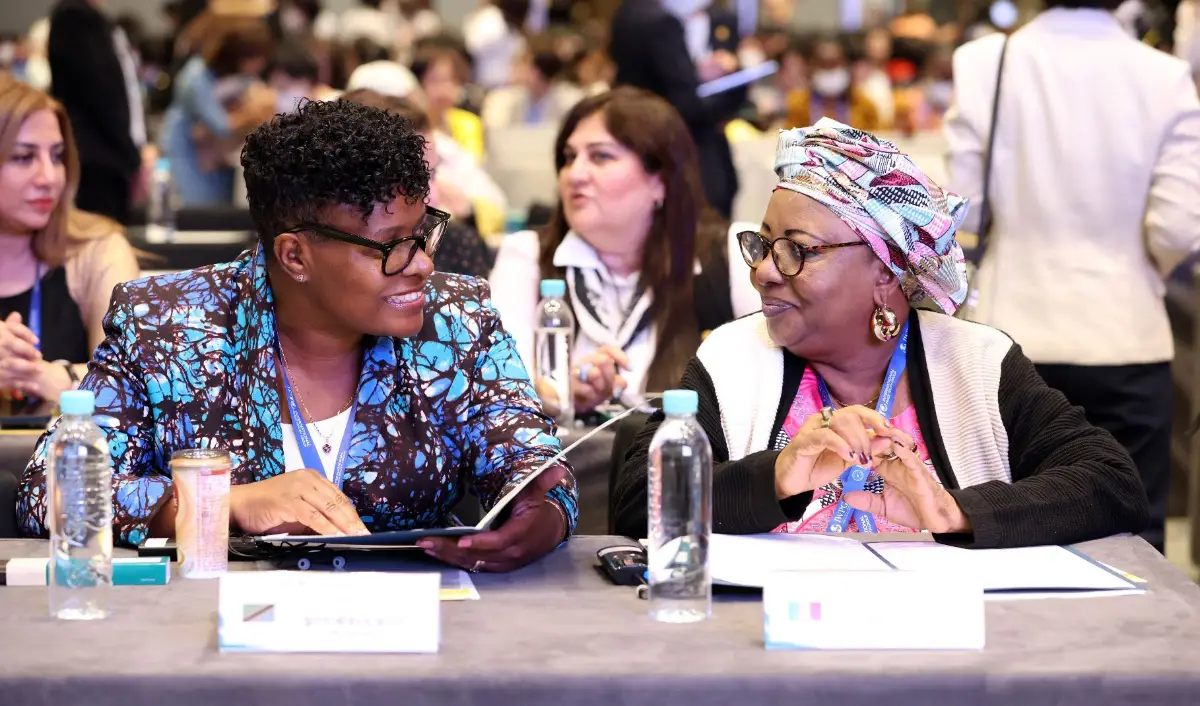
Session 2A Culture of Peace
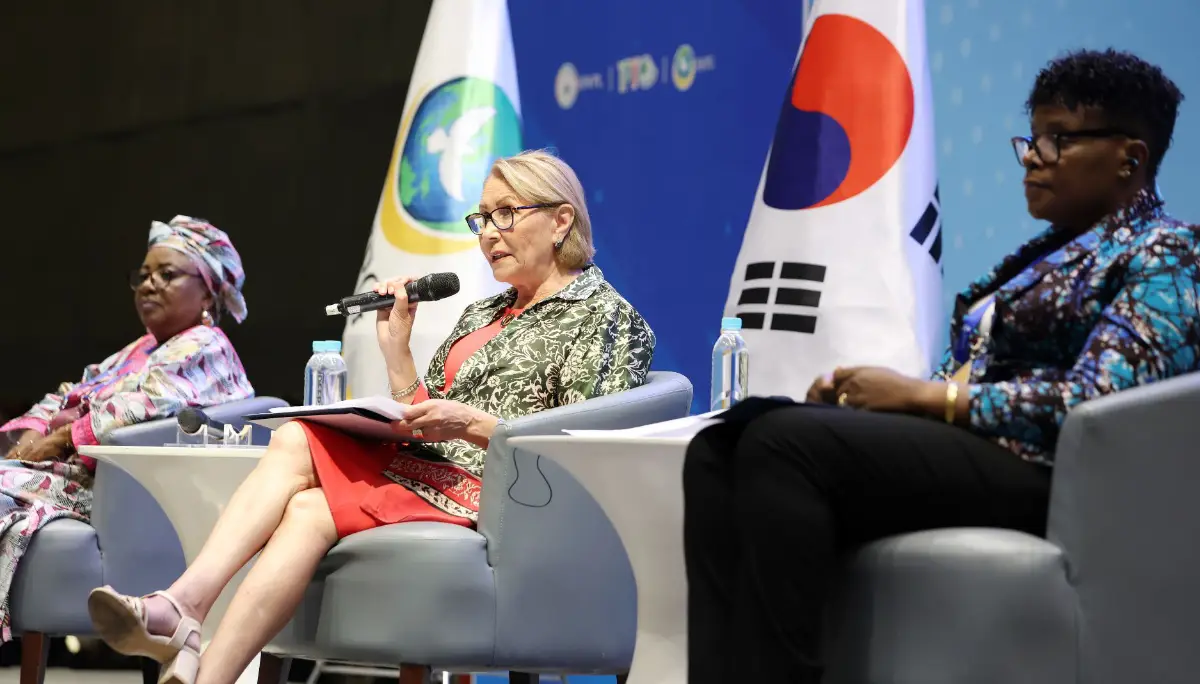
Panel TalkWomen’s Lives Changed Peaceful in Mindanao, PhilippinesMaria Theresa Royo-Timbol · Elizabeth Mangudadatu · Ruby Bañares-Victorino Moderator Charleen Hull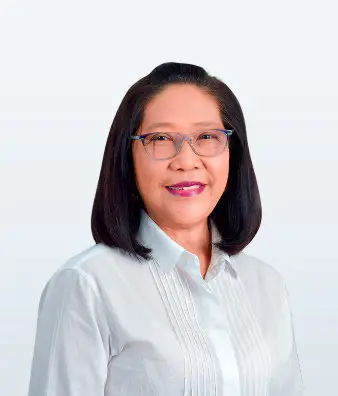
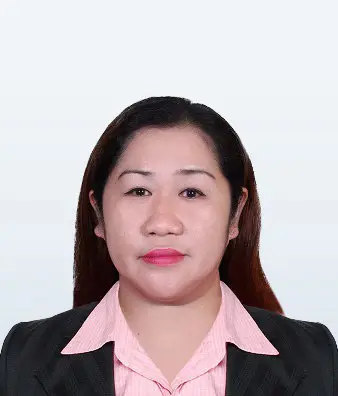
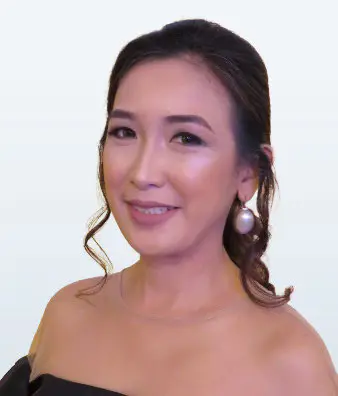
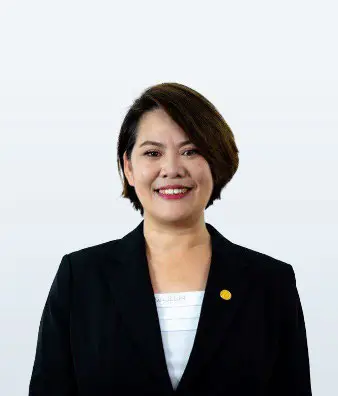
- 2023President of League of Municipalities of the Philippines, Davao Del Norte and One Davnor Council of Women, Inc.
- 2013Municipal Vice Mayor of Kapalong, Davao Del Norte
- 2019–2022Mayor of Municipality of Mangudadatu, Maguindanao
- 2007–2018Chairwoman of Barangay Tumbao in Municipality of Mangudadatu, Maguindanao
- 2008–presentActive Rotarian and Past President of the Rotary Club of Manila Metro, Chairperson of Youth Service Committee
- 2020–2022President of Zonta Club of Metropolitan Pasig
- 2019–presentIWPG HQ International Affairs Coordinator
- 1999–2003Volunteer and team leader of events in Peace Resource Center of San Diego
Charleen: Greetings and a warm welcome to all women leaders across the commonwealth. My name is Charleen and I am the IWPG Philippines, Manila Branch Manager. It is a great honor and privileged to be moderating for today’s 2nd Session discussing about the Peaceful changes in Women’s lives within the Philippines. Thank you for providing this precious opportunity and platform for all of us to gather and especially I would like to truly thank our invited three distinguished speakers who had agreed to share their experiences of peace in Mindanao and throughout other regions within the Philippines.
I ask for your understanding beforehand. Panels and I have occasionally talked about this theme before, so it was easy for us to organize the talk. However, as we got limited time today, we’re going to proceed based on script.
1. Conflicts in Mindanao
Charleen: Before we get into the Q and A, I think this would be a great time to explain about the past conflict in Mindanao, Philippines.
Mindanao was the one of the bloodiest conflicts in Asia, with more than 120,000 killed and at least 2 to 3.5 million refugees appeared. Ms. Ruby, can you briefly explain the historical background between the Philippines and Mindanao that sparked this conflict, mam’?
Ruby: Thank you, Charleen! Before I answer your question, I would like to share some geographical trivia about our country, the Philippines. Our archipelago is comprised of about 7,641 Islands with 2,000 that are inhabited, and the rest are still for naming. These islands are divided into three groups called Luzon, Visayas, and Mindanao. Luzon, where the City of Manila is located, is the biggest Island with population of about 66 million followed by Mindanao with an approximate population of 26 million.
Currently within the 26 million, 63% are Christians, 32% are Muslims, and 5% are of other religious backgrounds and beliefs. The conflict in Mindanao dates back to the 16th century. The Moro people, who are Muslims, have had a history of resistance against foreign or Spanish rule. The Spaniards colonized our country for about 330 years and introduced Christianity as a Religion. The Americans followed and provided a system of education patterned on them, and then came World War II with Japanese invasion of Manila. It was towards the end of the colonial era that Mindanao’s armed-conflict, civil war intensified.
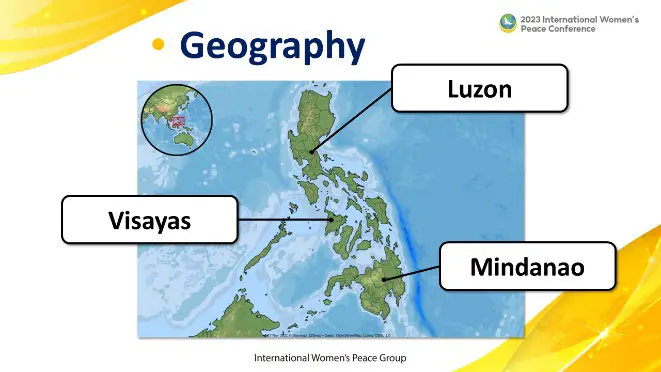
Charleen: I see. After Philippine independence, Muslims on the island of Mindanao began an armed struggle in the 1970s, demanding independence from the Philippine government, but the government used force to annex Mindanao. Oppression and discrimination against the Moro people ultimately led to over 40 years of conflict. Various anti-government groups, including the Moro National Liberation Front (MNLF), the Moro Islamic Liberation Front (MILF), and the New People’s Army (NPA), frequently engaged in civil war with government forces, and after several rounds of mediation and negotiations by the international community, the Philippine government and the MILF fought in 2012. Although the Bangsamoro Framework Agreement (FAB) was signed in October, deep-rooted religious conflicts were not easily resolved.
2. Women’s Lives in Mindanao during the Conflict
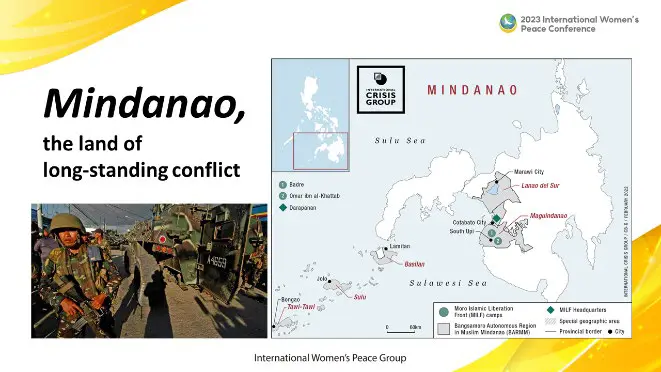
Charleen: Ms. Elizabeth and Maria, as both of you were born and raised in Mindanao, you must have a deep understanding of how women in Mindanao lived during the conflict period. Could you share some of your experiences? Let’s start with Elizabeth.
Elizabeth: Yes, of course.
I was born and raised in Mindanao; the southern part of the Philippines where armed conflict was thought to be a never-ending problem. In the past, I have witnessed many who have lost their husbands and children in war. The war that caused so much suffering especially for women who were left to juggle raising their children alone. Education is another thing as it was considered a luxury for most during the war. Because of the high rate of illiteracy, the unemployment among us was beyond imaginable. The Bangsamoro women could not ask for equal job opportunities for most of them could neither read nor write. As a result, most of the people in the Bangsamoro region were stuck below the poverty line. Poverty, which is the worst form of violence, was another battle that the Bangsamoro women had to fight in their day-to-day lives. The armed conflict was a big contributory factor to poverty in the region and this hindered the parents from sending their children to school, hence, the cycle of illiteracy and poverty continued from one generation to another.
What’s more, the conflict hindered industrial development of the island too. Mindanao is said to be the land of promise. We have vast agricultural land and rich natural resources. We also have stunning and world-class tourist attractions but because of our long history of armed conflict, the tourists’ first concern would be their safety. The conflict areas were not progressive because businessmen were hesitant to invest, hence, we were left out when it comes to development. The people and the leaders were desperate, and we were all craving for progress. But what we had was not enough for us to move forward because there was no peace. Investments and tourism were not improving.
Charleen: How about for you, Ms. Maria Theresa? Can you please share your experience as well?
Maria Theresa: Sure, I also experienced the similar situations.
Conflict in the IP communities in Kapalong, Davao del Norte decimated women’s well-being. They faced instability, fear, and limited access to basic services because of the conflict. IP women faced greater risks and vulnerabilities and suffered displacement, and harassment from the insurgents. The conflict disoriented their daily routines and cultural structures, disrupting community cohesion and traditions. The conflict also disrupted women’s economic and educational opportunities. The instability restricted their access to livelihood resources, making it hard for them to support their families and become financially independent. The violence also disrupted education, reducing IP women and girls’ opportunity for education. The conflict also hindered healthcare and reproductive rights. Due to limited healthcare facilities and resources, maternal and birth death rates rose. The absence of basic healthcare impaired their general well-being and the quality of life. Women in IP communities had different conflict experiences, and the conflict increased gender disparities and indigenous women’s struggles.
3. The Civilian Peace Agreement by HWPL and Changes
Charleen: Yes, thank you for your words. Peace eventually found its way to Mindanao, where the end of the conflict seemed uncertain. The civilian peace agreement mediated by HWPL was achieved in 2014. Could you please share what the local response was like at that time, from your experience in Mindanao, Ms. Elizabeth?
Elizabeth: We have seen the transformation in our place here in Mindanao because of the peace efforts and intervention of the NGOs like the Heavenly Culture, World Peace, Restoration of Light (HWPL) and Declaration of Peace and Cessation of War (DPCW). The efforts of Chairman Lee and his team to mediate peace in Mindanao by having a peace agreement has stamped out the embers of conflict, by resolving the fundamental cause, religious feud.
As a woman leader in Mindanao and a peace advocate myself, I would say that the peace initiatives of Chairman Lee and HWPL is such an inspiration and blessing for all of us. The Bangsamoro and the future generations will no longer experience the difficulties and trauma brought about by war. Our dreams to have a progressive and peaceful community are now within our reach. We will forever be thankful to Chairman Lee, HWPL and DPCW.
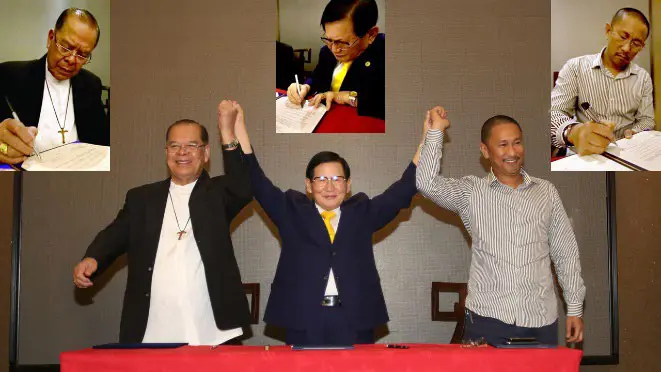
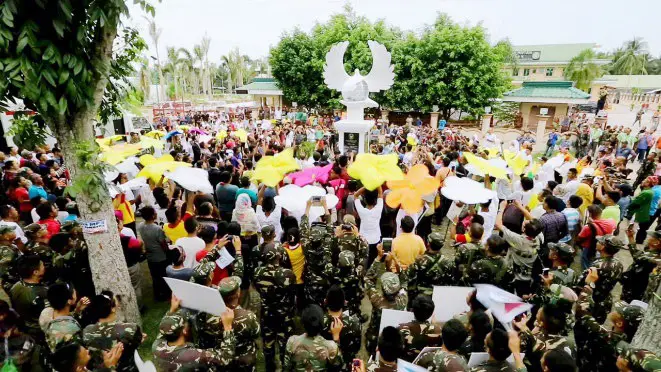
Charleen: Ms. Ruby, what do you think this peace agreement means?
Ruby: The Mindanao Peace agreement mediated by HWPL, and the many peace works of IWPG thereafter, involving the civil society is for me an effective strategy to achieve sustainable Peace. To end the conflict, we therefore need a strong political will, humanitarian, and long-term response not only from our various government agencies but also from the civil societies. The partnership between our government, the various non-government agencies, the civil societies like us, Rotary and Zonta during the covid pandemic had proven that basic needs like food, shelter and even job employment can be provided easily and to many of our marginalized sectors. I am hoping that with the peace agreements and other initiatives of HWPL and IWPG like the implementation of its peace education in various schools, institutions and especially on women’s organization will awaken the minds, provide inspiration and the needed motivation for many individuals and organizations to unite and work together towards a common goal of lasting peace in our country and in the world.
Charleen: Then Ms. Elizabeth, what is the overall changes in women’s lives after the peace agreement?
Elizabeth: We found hope, a silver lining from this troubled land. Bangsamoro women are by nature strong-willed and resilient. We have remained steadfast and optimistic despite everything. So, when the war subsided, with the help of the government and non-government organizations such as the HWPL, we, the Bangsamoro women, started to find our courage to fight for peace and actively participate in the peace process.
Many of us are now holding significant positions in society. We now have many women leaders, and some are internationally recognized because of their remarkable achievements. Women are now given equal job opportunities. Poverty is undeniably still present, but we are progressing.
Charleen: As the Municipal Mayor of Kapalong, Davao del Norte, Mayor Timbol, you are currently leading and driving significant changes in Mindanao. I’ve heard that there have been many transformations in Mindanao since the peace agreement. How has the region changed politically, socially, and economically after the peace agreement? Additionally, what changes are you working to bring about as Mayor?
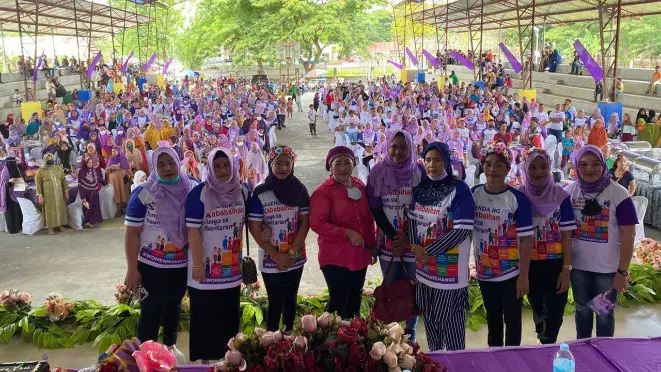
Maria Theresa: Being a municipality free from insurgency, we successfully facilitated the provision of essential services to our constituents, with a particular focus on Indigenous People community. The local government is now able to execute a diverse range of initiatives, programs, and activities— free from the harassment of the revolutionary groups. Considerable progress has been achieved toward improving infrastructure, encompassing the development of transportation networks, educational institutions, housing developments, electrification projects, and healthcare facilities, among others. Furthermore, the local government has adopted a range of initiatives aimed at fostering economic growth by facilitating the creation of sustainable livelihoods for its residents, thereby resulting in an increase in economic opportunities for the community as a whole. The quality of life of people, especially women, has experienced substantial improvements as a result of expanded opportunities for education and enhanced access to healthcare services.
As of today, we have established 74 school facilities—34 of them were established in various IP communities. The establishment of these facilities, including our local college, was able to provide opportunities for our children, in particular our indigenous children at the silver lining. Furthermore, in the last school year, the local college was able to produce six IP graduates with a degree in agriculture; these graduates are our valuable products in our efforts to respond to our ultimate call for peace. Presently, there are 6,000 students enrolled in our local college, and 660, or 3.4%, of the overall student population are Indigenous people from our IP communities.
On the other hand, the LGU (local government unit) also constructed 22 health facilities, of which 6 are established in the IP communities. We have provided 5 doctors, 20 nurses, 11 midwives, and 177 community health workers, including the provision of emergency and rescue vehicles for the facility’s operation and the needs of the community.
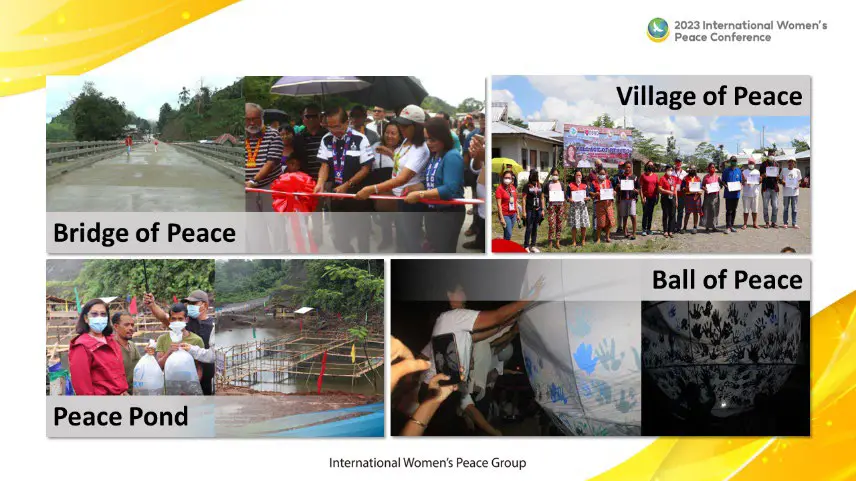
With our commitment to effectively institutionalizing peace, the establishment of the three Peace Villages with 700 housing units located in our IP community is of great significance to the lives of our IP brothers and sisters. They were not only provided with basic services but also a community that they could truly call home. Likewise, the development of the Peace Pond represents the active engagement and involvement of the IP community. The project aims to establish a peaceful community while advocating ecologically sustainable livelihoods through fishing and aquaculture initiatives. Kapalong is currently experiencing a notable transformation, characterized by a flourishing community that exhibits a strong commitment to go beyond previous years of crisis.
In commemoration of the achievement of making the whole community free from insurgency, the local government unit of Kapalong was observing its annual Peace Day. The annual Peace Day event serves as an acknowledgment to the collective efforts of the community in achieving lasting peace. Furthermore, the commemoration of Peace Day is established by means of the enactment of Municipal Ordinance No. 1025, which designates the month of March in every calendar year as Municipal Peace Day in the municipality of Kapalong.
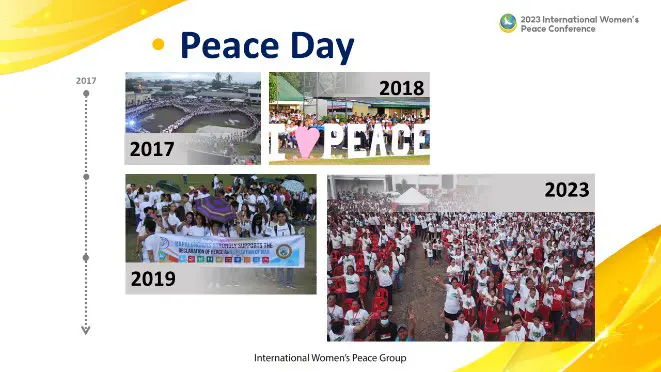
Charleen: As we just heard about the changed lives of women in Mindanao, I would like to ask Ms. Ruby, have you noticed much change from individuals who have moved from Mindanao to Luzon, and does it affect you in some ways?
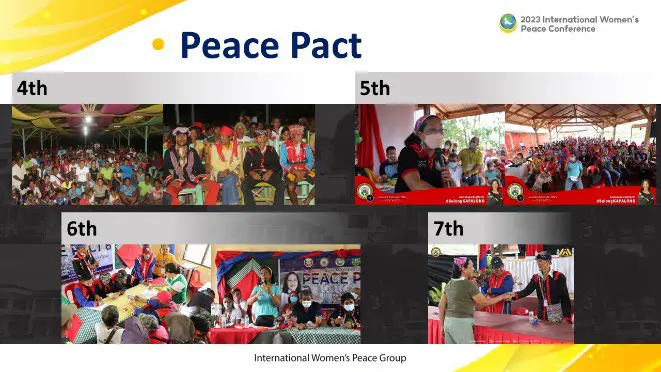
Ruby: I have many women friends from Mindanao who now resides in Manila. Based on my experience with them, some opted to just focus on starting their new life again and some have become a walking and living testimony of their actual situation, struggles and how they were able to rise up again. As I mentioned a while ago, geographically, we are far, and we don’t have the first hand and even accurate information of what really is happening in Mindanao. Their aspiration to end the war and bring peace is so evident and strong and they themselves look for individuals or even organizations to extend assistance for their families, friends, and community members left behind. Their stories shared, were able to broaden our understanding of the root causes of conflict and enable us, the civil society and non-government organizations like our club, the Zonta Club of Metropolitan Pasig and the Rotary Club of Manila Metro to look for a solution that will provide lasting and sustainable peace. One of our Muslim friends requested for assistance in providing rehabilitation programs on areas directly hit by the war. We let our government provide the basic food and temporary shelter while organizations like us extends support on rebuilding their houses, schools and conducting various activities like counselling for emotional support to displaced families. It is a collaborative approach as we sympathize, empathize, and got inspired from the testimonials of individuals who have moved from Mindanao to Luzon.
4. Messages to the Women in Troubled Regions
Charleen: Yes, thank you very much to all our speakers for sharing with us your valuable insights, Lastly, can we please ask if you could share a brief message to the women in conflict-affected areas? Can we start with you, Ms. Elizabeth?
Elizabeth: For all the women out there, who are still in conflict areas, don’t lose hope. Fight for peace not by violence but by equipping yourselves and children with education. Raise your voice and stand-up for peace. Be advocates of peace in your own little way and support NGOs like HWPL. Start molding your children to be good and peace-loving citizens. Finally, war is never sweet for us who have experienced it. Thank you and We are one for Peace.
Charleen: Thank you very much Ms. Elizabeth, and for you Ms. Maria Theresa.
Maria Theresa: I truly support you in your fight for a world free from oppression and violence. I express my unwavering support, as we are on the same course in the pursuit of spreading peace. Remember that you deserve a better world, we deserve a better future. Together, let’s fight for peace!
Charleen: Thank you, Ms. Maria, and last but not least, Ms. Ruby.
Ruby: There is always light at the end of the tunnel. I would like to share a Bible verse in John 14:27, Jesus said, “Peace I leave with you; my peace I give you. I do not give to you as the world gives. Do not let your hearts be troubled and do not be afraid.” God wants peace for all of us, he sees everything and by his grace, he will protect all those women that are in conflict areas.
As a woman, we have our natural traits such as nurturance, sensitivity, sweetness, supportiveness, warmth, empathy, affection, tenderness, and understanding. We use these traits to create an environment of loving individuals starting at our homes. Peace and love must begin with us. I love the quote in one of the speeches of President Kennedy which says, “Ask not what your country can do for you – ask what you can do for your country.” I call for all women to unite and be proactive rather than waiting for their governments support. The solidarity amongst us and our partnership with women’s organization like IWPG is our key to achieve sustainable peace. Jesus says, “Blessed are the peacemakers for they shall be called sons of God.” Let us all be peacemakers!
Charleen: Well, this will conclude our session. I would like to thank everyone for your time and a big thank you to our three panelists for providing such wonderful answers.
Thank you.
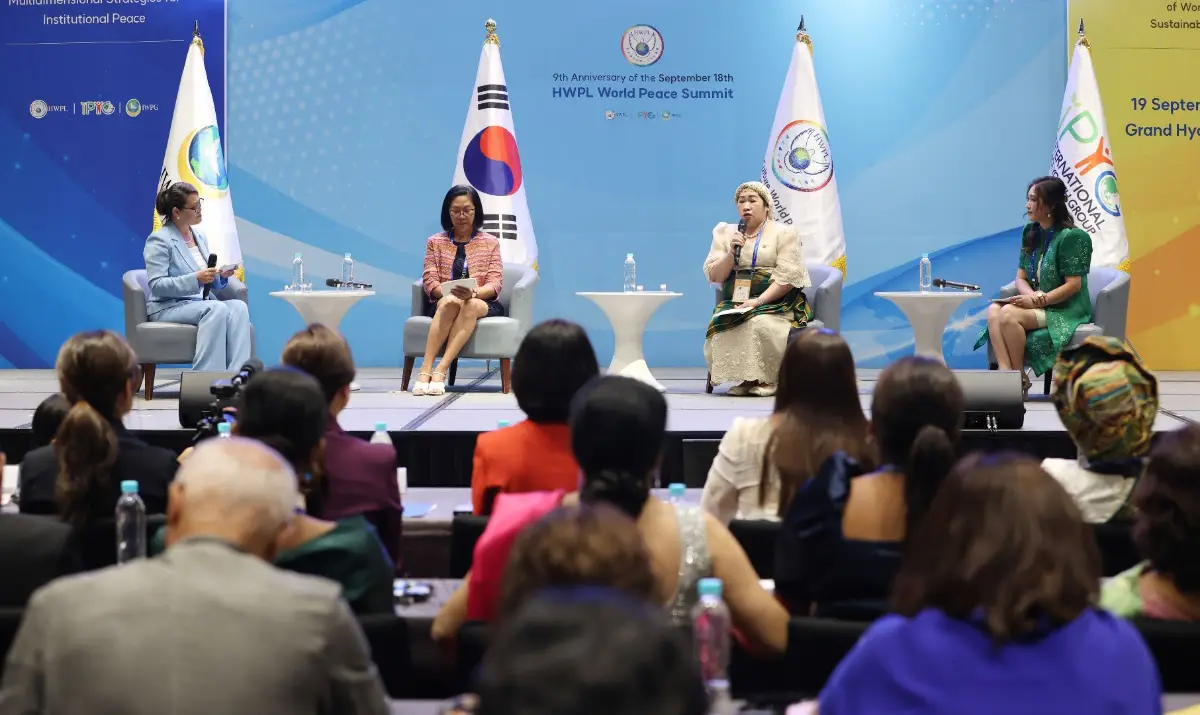
Session 3Institutionalization of Peace
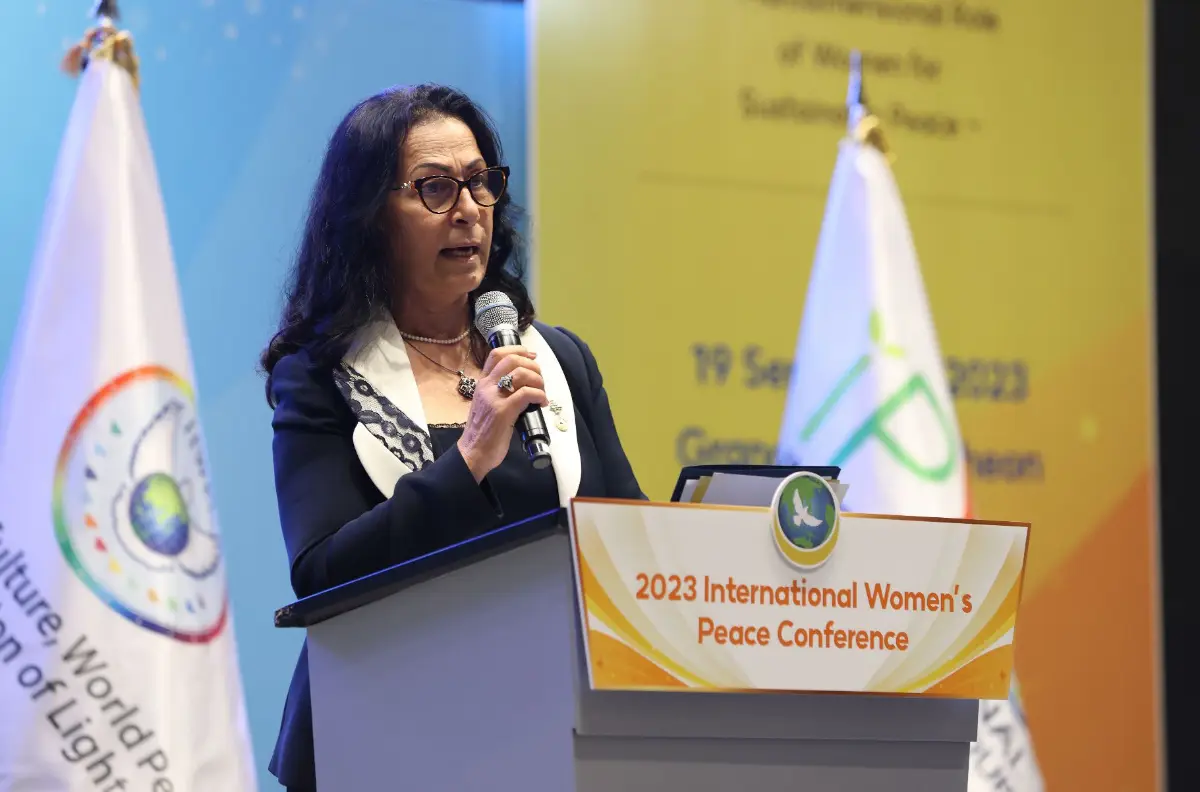
Speech 01Limitations of International Law Surfaced by the Current International AffairsDr. Ahlam Beydoun Former Professor at the Faculty of Law, Political and Administrative Sciences, Lebanese University, Beirut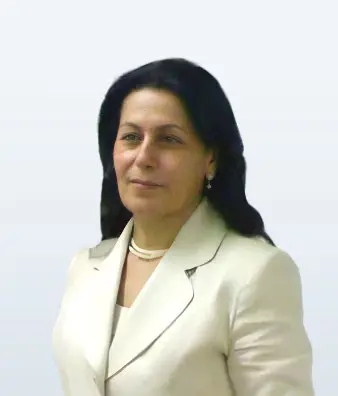
- 1993–2018Professor at the Faculty of Law, Political and Administrative Sciences, Lebanese University, Beirut
- 1989PhD in International Law, Free University of Brussels, Belgium
International peace and security have been longstanding goals of humanity, essential for preserving human life and safety. These two principles of world peace and security have been pursued by various religions, leading to the signing of treaties to end wars and establish peace. They hold a significant place in the Charter of the United Nations (UN), an organization founded for the stability and development of human life. In this discussion, we will examine the approach to global peace and security through the UN Charter. The UN Charter primarily addresses international peace and security, discussing the obstacles to achieving these principles and proposing strategies to realize them. First and foremost, the UN Charter emphasizes world peace as a primary objective and means. Virtually all provisions of the Charter focus on this goal. Rules for maintaining world peace are established, and acts that threaten peace are considered crimes. Furthermore, restoring world peace is closely linked to restoring international security. Both world peace and security are core elements of human growth and development.
As mentioned earlier, the UN Charter, or the Charter of the United Nations, mainly emphasizes international peace and security, urging nations to uphold them. These regulations are provided as general goals and principles with strong legal and ethical authority. They are considered peremptory norms (Jus cogens) in international law, meaning they must be strictly adhered to, and failure to do so results in severe consequences and liabilities. The UN Charter respects the sovereignty of all nations equally and refrains from interfering in the internal affairs of other countries. It also protects the right of peoples who have not yet formed their nation to self-determination. In cases where these principles are violated, it recognizes the right to self-defense, including preventive, individual, or collective self-defense. However, it sets conditions to prevent the abuse of the right to self-defense, ensuring that such aggressive actions cease after achieving their initial defensive purpose. These provisions emphasize international peace and security and encourage cooperation among nations.
Nevertheless, the principle of non-interference in the internal affairs of member states can be an exception in the context of enforcement measures specified in Chapter VII of the UN Charter. These measures are applied when a state violates international law or commits human rights abuses. The concept of “humanitarian intervention” or “responsibility to protect,” established in the 1980s, justifies international intervention when serious human rights issues arise within a country.
Secondly, the difficulties in achieving international peace and security, or the challenges faced by the UN in achieving these goals, are related to national practices and the functioning of the UN.
1. National Practices:
The UN Charter, including the Charter of the United Nations, was drafted by the victorious nations of World War II. It includes agreements from post-World War I and serves the interests of the victorious nations. Consequently, while the UN Charter contains rules to promote world peace, these rules were established to serve the interests of powerful nations.
As a result, the concept of “justice” in the international community transformed into preserving these interests. This led to violations of national sovereignty, self-determination, and human rights abuses, as powerful nations exploited weaker ones and interfered in the internal affairs of other countries. The terms “humanitarian intervention” and “responsibility to protect” were often abused for economic, military, and political gains. Such nations fostered corruption, stirred up chaos and conflicts, and caused discord between internal stakeholders and those who rejected external intervention, leading to inequality where rights were granted to some regions while denied to others. Additionally, post-World War II saw the division of nations and border changes.
These double standards in international policy have resulted in widespread terrorism and corruption worldwide, along with various difficult global crises and challenges. The United States benefited from the collapse of the Soviet Union and imposed sanctions on other countries based on its internal laws, ignoring international law.
2. The UN and the UN Charter:
The UN Charter delegates the task of maintaining international peace and security to the Security Council. However, the Security Council does not make decisions based on the principle of sovereign equality and is not neutral. Most resolutions are subject to the veto power of the five permanent members of the Security Council, meaning that international peace and security are determined by the interests of these five nations. This contradicts the main principles and objectives of the UN Charter, making it difficult to achieve its other goals worldwide.
The problem doesn’t end there. The International Criminal Court’s work is primarily channeled through the Security Council, and the veto power of major nations obstructs the punishment of major criminals and perpetrators of serious crimes.
Thirdly, there are two dimensions to the spread of peace and the establishment of security for humanity: public awareness and the mechanisms of the UN.
1. Public Awareness Dimension:
The term “public” here refers to all individuals globally. Citizens of developed countries must be aware of events happening outside their own nations and issues faced by third-world citizens. They should monitor and prevent their governments from committing criminal acts against third-world citizens due to their ignorance.
Third-world citizens should be able to voice their concerns to the global community and interact with people around the world. They should protect their countries and natural resources from foreign exploitation, achieve true independence, determine their own destinies, and choose their desired political and economic systems. Fortunately, the advancement of communication and technology has greatly facilitated information exchange, idea sharing, and effective dissemination of the truth about current situations, providing more opportunities for people worldwide to interact.
The global public opinion plays a crucial role in achieving international peace and security. It can help move in the direction of realizing international peace by eliminating global tensions and the root causes of wars.
2. UN Mechanisms Dimension:
The UN must ensure national representation and improve the decision-making process in the Security Council, making it more efficient, objective, and neutral. This would encourage major powers to relinquish their privilege of veto in favor of the common good of humanity. In summary: – Reform the Security Council and apply international law and the UN Charter effectively and impartially to establish international justice.
– Enhance international cooperation based on just principles and refrain from exploiting the resources of developing countries.
– Major powers should abandon their domination over international politics, resources, and strategic areas and cease imposing sanctions on other nations that cause widespread disasters and crises. – Strengthen collective self-defense to allow oppressed and discriminated populations to exercise their right to self-determination.
– Establish rules to distinguish terrorism from movements for national liberation, particularly crimes related to colonial domination, such as detaining and killing indigenous people, forced displacement, land and resource grabbing, and the occupation of foreign armies. These actions result in discrimination against the remaining indigenous population.
In conclusion, I hope that today’s conference will be successful and that the proposed “Declaration of Peace and Cessation of War” (DPCW), which contains new international laws for peace, will become a beacon of hope for humanity and future generations.
Speech 02Significance and Main Contents of the DPCWMs. Lee Kyou-sun Former General Director of IWPG HQ Department of Peace Education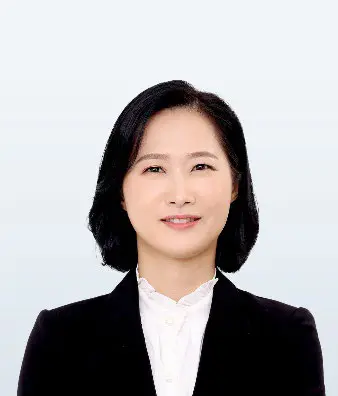
- 2022–presentIWPG HQ Department of Peace Education, General Director
- 2017–2022Assistant Administrator of International Women’s Human Rights Committee
To all the family members of peace around the world, it is a pleasure to meet you all. I am Kyu Sun Lee, the Director General of Peace Education of IWPG Headquarters. It is an honor to be with everyone today on this precious day.
When I received the opportunity to give this speech today, I thought a lot about what I should discuss. But, before I continue, let me briefly introduce myself. I am a mother to a son. If my country goes to war, my son is obligated to put on his military uniform and go to the battlefield. Although South Korea seems like a peaceful country, it is still technically in a state of cease fire. So, all adult male citizens are obligated to serve in the military and, there is no exception for my son. As a mother there is nothing more dreadful than having my son go to war with a murder weapon. There may even be some who experienced such horrendous situations firsthand sitting here today with us. Even with the recent Russo-Ukrainian war, everyday lives were abruptly destroyed, and young people were sent to the battlefield where they stood at the crossroads of life and death. Young men who lived ordinary lives are suddenly holding guns and pushed into harm’s way the very next day. Just like that, countless young people go to the battlefield and disappear like dew. Every time I hear news regarding war, I would think of the worst-case scenario, which is my own son being sent to the frontlines. Then, I would make a determination to accomplish world peace for the sake of my children and for the sake of this world.
So, as a person in charge of peace education, I have come to realize the necessity of institutionalizing peace to ensure that peace education transcends the current generation and endures for generations to come. Through this process, I became interested in the groundbreaking Declaration of Peace and Cessation of War, known as, the DPCW. The reason for my interest was that to build peace, substantial and binding measures are essential, and the DPCW offers guidance and objectives in this regard. If women around the world become aware of the existence, content, and significance of the DPCW, we can work together to end war and achieve world of peace, which we all desire. Therefore, I would like to take this opportunity to introduce the DPCW and unite all our hearts as one.
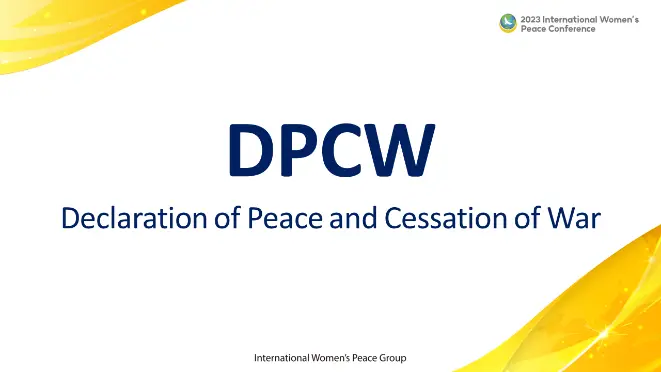
The DPCW was established through the efforts of the HWPL International Law Peace Committee, composed of international law experts, and was proclaimed on March 14th, 2016. This declaration consists of 10 articles with 38 clauses, and we can categorize the 10 articles into two parts: roles and the content.
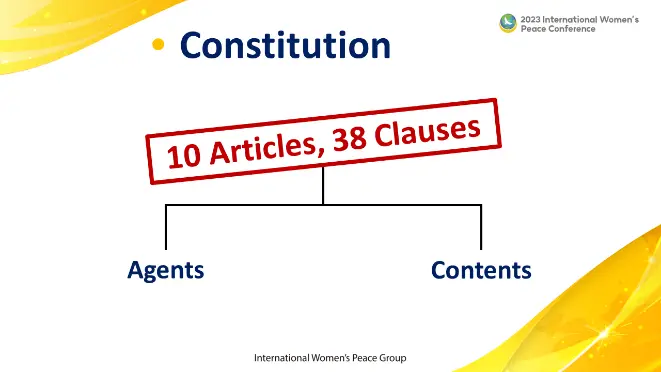
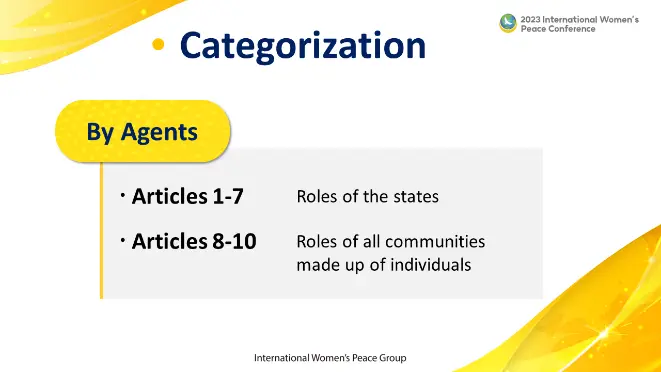
Articles 1 to 7 and Articles 8 to 10 are categorized as roles. The first half of the declaration, which are Articles 1 to 7, addresses the roles of states, and the second half, Articles 8 to 10, emphasizes the participation of not only the states, but also the roles of all communities made up of individuals for the development of peace.
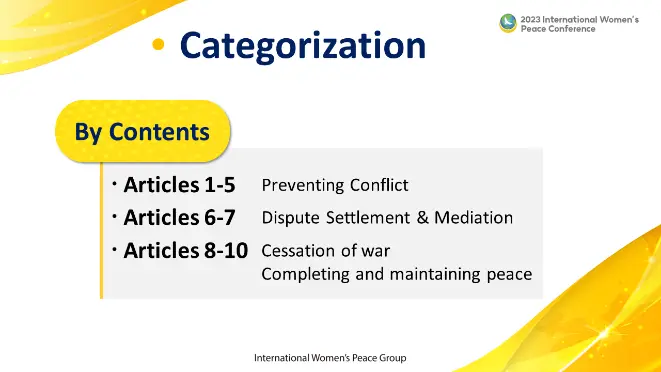
Next, is the content that is categorized into three parts. Articles 1 to 5 present methods for preventing conflict, Articles 6 to 7 offers dispute settlement and mediation when conflict arises, and Articles 8 to 10 presents ways to end conflict and establish and maintain peace. Now, what part of this declaration should we focus on?
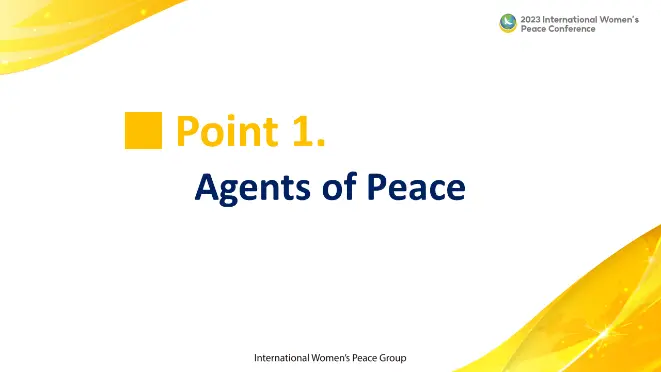
We must first realize that those responsible for peace are not only the states, but it is also individuals from different backgrounds. Those who initiate conflicts and wars can be individuals, non-state organizations, or states. In an increasingly diverse international society, the influence of individuals and groups continues to grow. Building a peaceful world is this era’s project that requires all of our cooperation. The DPCW focuses on this point and highlights the efforts of civil society and the influence of the culture of peace in addition to national efforts. This truth reminds us that peace can start from individuals. As members of the international community, women have the power to create significant ripples through our personal changes and actions. We shape, enjoy, inherit, and pass down culture. The way I think, the things I seek, and the actions I take become history for future generations. I believe everyone here is already aware of this. Even in a family, that is like a small society, we have a great impact on one another.
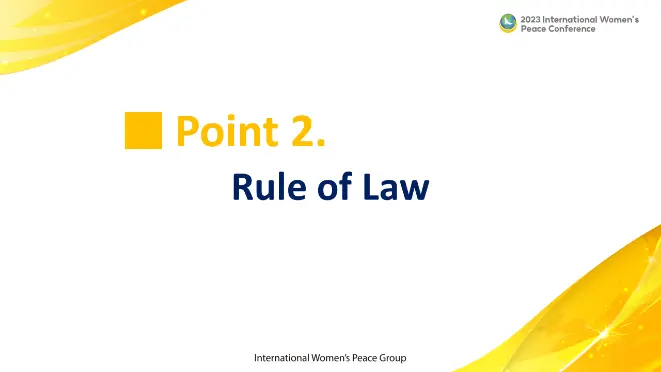
Furthermore, the DPCW advocates for a world governed by the principles of law. We all are aware of how important this truth is. As an educator myself, there were countless times where I felt the importance of teaching the spirit and virtue of becoming a member in a peaceful society in order to achieve a world without conflicts or disputes. When we think military force can be used to resolve issues, violence and war breaks out. We have created the principle of law to prevent the reckless abuse of force; and to achieve the most rational and fair agreement, we need to consider and declare better values, better laws, and regulations. The DPCW encompasses the fundamental values found in various documents, such as the UN Charter, the Universal Declaration of Human Rights, and international agreements. It highlights values like peaceful coexistence, tolerance, and mutual respect. The DPCW explicitly outlines numerous clauses to foster an understanding and respect for diversity in our international society, and it sets the background for principles that all must pursue and uphold. Therefore, if the DPCW were to become a legally binding instrument, it would serve as a cornerstone and a new order for constructing a world of peace.
We are joined by women from diverse countries and backgrounds for today’s conference. And there is a need for all of us to take interest and support this declaration. If no one had paid attention to and supported the Universal Declaration of Human Rights when it was proclaimed, human rights might have progressed at a much slower pace, and human dignity and rights could have been disregarded. The same applies to the DPCW. If we do not take an interest in what the DPCW conveys, its underlying values, and the efforts required to institutionalize it, a world without war will remain distant. IWPG is currently carrying out numerous projects based on the spirit of peace that is in the DPCW, and IWPG is actively advocating for the DPCW to be presented as a legally binding international law. We must realize and establish permanent peace. To achieve this, I hope that everyone will show interest in the DPCW and join us in supporting it. Let us work together to secure a future where our beloved children and families are protected from war. Let us achieve not just achieve peace that is fleeting but one that is everlasting.
Thank you.
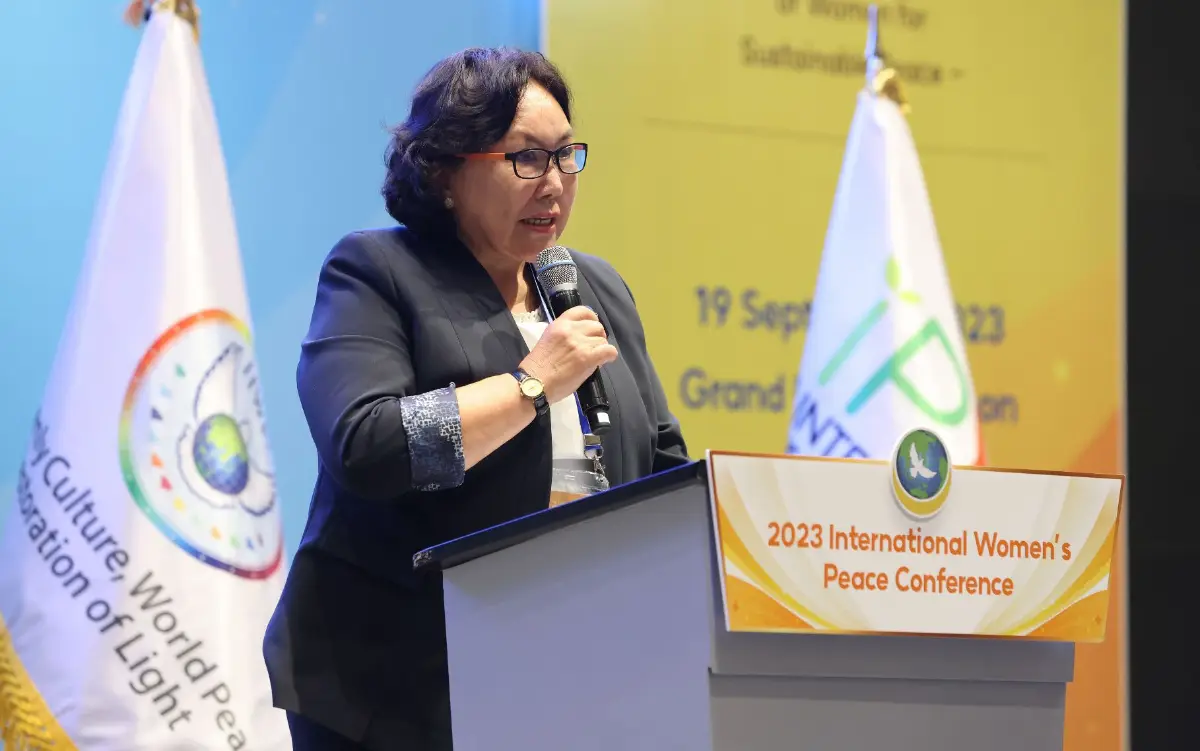
Speech 03The Role of Women in the Institutionalization of Sustainable PeaceMs. Budee Munkhtuya President of Association of Mothers with the Order of Famous Mothers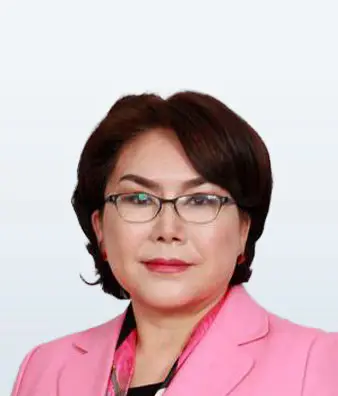
- 2007–presentPresident of Association of Mothers with the Order of Famous Mothers
- 2004–2008Member of the Mongolian Parliament, Chairman of the Standing Committee on Security and Foreign Policy
Hello, admirable family of peace,
I am Munkhtuya from Mongolia. I sincerely welcome everyone to the 2023 International Women’s Peace Conference.
Has anyone here experienced war before? When I was young, war existed in the world, and it continues today. As we are all aware, the world is suffering from many conflicts, environmental issues, and wars and conflicts that threaten peace. In addition to the Syrian Civil War and Gulf War, the prolonged Russo-Ukrainian War reveals the many limitations international law has for peace. Why do non-peaceful situations like violence in society and political instability continue despite various peace treaties between countries and international organizations, such as the UN, that are made for peace? We gathered here today to overcome this reality and seek a new path to realize peace.
Mongolia and South Korea have had significant exchanges in diplomacy and security. In 2022, under the motto “Peace and Development in Northeast Asia Will Lead to Korean Peninsula Unification,” the Mongolia Diplomatic and Security Forum was held, with the participation of key political figures, professors, and researchers from various countries. While working in countries like the United States and the United Kingdom, I was shocked to learn that not only Mongolia but also all nations around the world invest substantial budgets in preparing for war. It occurred to me that if the world had embraced peace instead of war, the massive defense budgets could have been used for sustainable development in each country. However, on the other hand, I also believed that fundamentally, war can be preventable. In this regard, the 10 Articles and 38 Clauses of the DPCW, first proclaimed by HWPL, a collaborative organization of IWPG, was both thought-provoking and impressive. It encompasses all the clauses that can fundamentally prevent war, such as reducing arms support and production, refraining from invading other countries’ territories, and guaranteeing self-determination for each nation.
Furthermore, it promotes a culture of peace that can prevent religious conflicts and achieve lasting peace.
The mission of IWPG to protect children during conflicts and leave peace as a legacy for the future generations resonated with me, especially the 10 Articles and 38 Clauses of the DPCW. Since then, I have actively engaged in advocating and urging for the establishment of the DPCW in collaboration with various organizations in Mongolia.
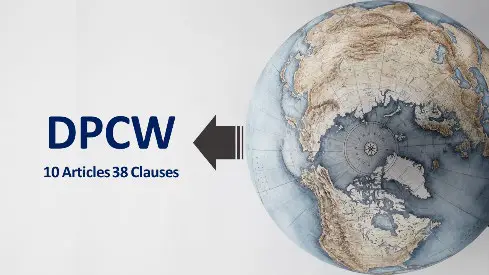
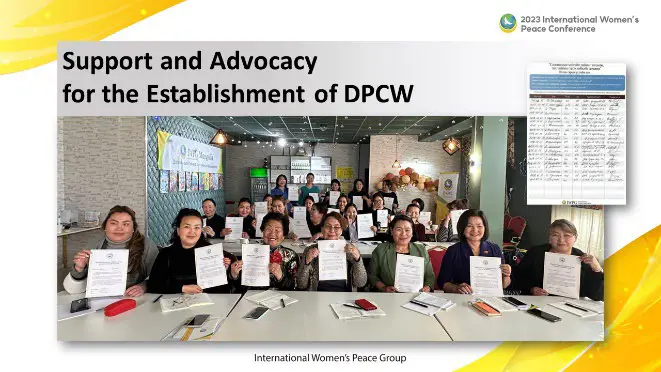
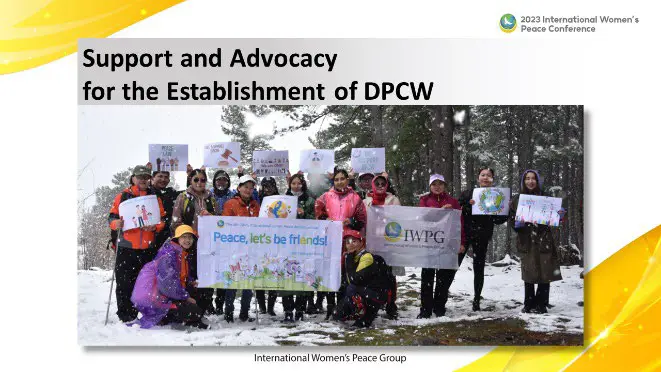
In Mongolia, we have been running campaigns to support DPCW in all regions except for Gobi-Altai since 2016. Many organizations, including the NGO, LEOS, and the Association of Mothers with the Order of Famous Mothers, actively participated, resulting in over 5,200 signatures so far. These efforts have been highly successful, with many women registering and actively joining IWPG to engage in peace activities.
The 10 Articles and 38 Clauses of the DPCW holds significant value in the realm of education as it provides the only solution to fundamentally prevent war. Therefore, I have been focusing on women’s peace education in Mongolia and have been striving to achieve concrete results through practical activities and the continuous training of peace educators through IWPG’s Peace Lecturer Training Education (PLTE).
Moreover, we need to actively participate in government-level negotiations for the DPCW to become an internationally binding law. Women’s participation in the negotiation process plays a crucial role as they can offer unique perspectives and wisdom in conflict resolution. By increasing women’s participation in political and social decisions, we can contribute to the creation of more peaceful and inclusive international laws.
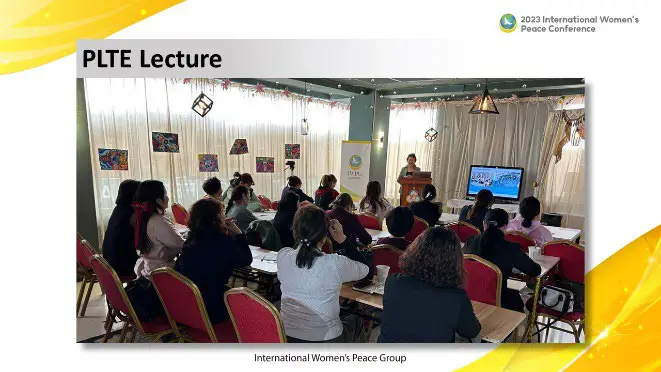
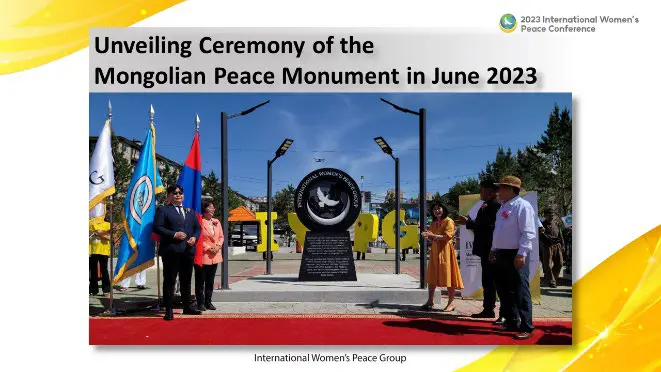
Collaboration among various civil institutions and organizations is also essential for building peace. During this process, women’s leadership qualities such as communication, cooperation, and reconciliation are crucial. To promote awareness of peace and achieve practical peace, we need to foster cooperation through a peace community that focuses on various topics and activities. In June of this year, IWPG organized the Mongolian Peace Assembly under the theme “Women Uniting as the Light of the World.” Approximately 300 leaders from various fields gathered to discuss IWPG’s values of peace and pledged to spread peace throughout Mongolia. We also erected a Peace Monument with the hope of safeguarding peace and leaving an eternal legacy of peace for future generations.
Today’s conference is an opportunity for us to formulate practical goals and take concrete actions to achieve peace. Peace is everyone’s responsibility, and the efforts and roles of women are crucial in realizing it. Let us, now, not just proclaim peace in words but take even small steps toward it. When women come together, we can connect the branches of peace and advance towards a peaceful world. I hope that, from this moment, we can sow the seeds of peace together and embark on a new leap toward achieving world peace.
We can do it. Thank you!
Closing
ConclusionComprehensive ConclusionMs. Jeon Na-hyeong Former Secretary General of IWPG HQ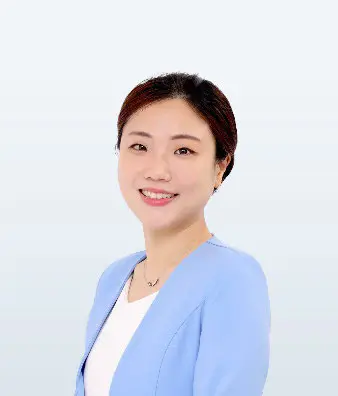
- 2019–presentCommemoration of the April 26th International Women’s Peace Day | Overall Project Leader
- 2018–presentUN CSW | Participant
- 2018–presentPeace Tour (27th to 32nd Tour)
- 2015–presentSeptember 18th World Peace Summit | Co-Organizer
Greetings ladies and gentlemen,
I am Na Hyeong Jeon, the Secretary General of IWPG. First, I would like to thank everyone for joining the 2023 International Women’s Peace Conference. I would also like to thank all the speakers for sharing their valuable insights and experiences.
In today session, under the theme of “The Multidimensional Role of Women for Sustainable Peace,” we first heard special remarks from H.E. Aya Benjamin Warille followed by insights from women’s peace education, culture of peace, and institutionalization of peace.
Just as Dr. Maiga mentioned, we must empower women and strengthen the awareness of peace through education. Ms. Néziha Labidi and Ms. Msaki mentioned how women’s peace education can encourage individual’s change and actions and can positively influence society. If this education becomes widespread and if people who took this education come together, this in turn becomes culture. Culture forms the roots of values and exerts influence on a more comprehensive and extensive framework of life. That is what happened in Mindanao, as we have heard from Mayor Timbol, Vice Mayor Elizabeth Mangudadatu, and Ms. Ruby Bañares-Victorino. Most importantly, peace must not be a temporary act but a standard that is legally binding. So, with a sense of responsibility for the present and future generation, we must think of ways to build institutions that are necessary to humanity like Dr. Ahlam Beydoun. DPCW will be the guiding principle, and as Ms. Munkhtuya said, we women must think of our role in the peacebuilding process.
In this way, a culture of peace begins where transformed individuals through peace education gather, and through the process of this culture becoming legally binding through institutions, it can lead to achieving our goal of “sustainable peace.” Therefore, IWPG has been actively promoting initiatives such as “Women’s Peace Education,” “Spreading a Culture of Peace,” and “Urging for the Legalization of DPCW.”
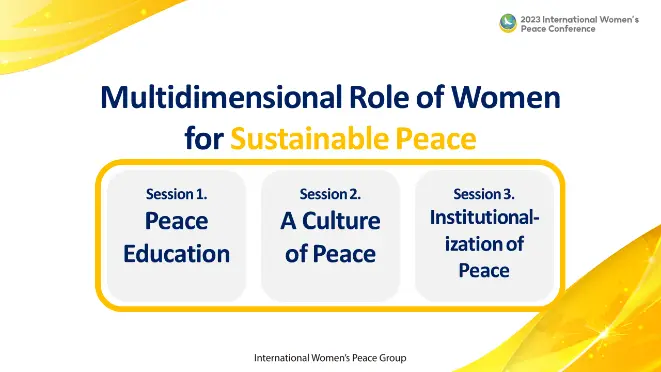
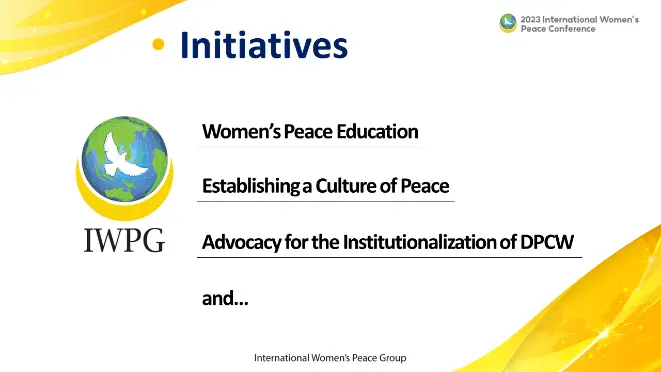
Furthermore, another important aspect I want to highlight is “solidarity.” Each of us individually may be weak, but when we come together as one, we are strong. We can make the impossible, possible. We need the strength of the women leaders gathered here today, for our loved ones and to achieve peace. IWPG not only host this conference every year, but also organizes various platforms for discussion and exchange. Our discussion today must not just end with words, but we hope that it leads to practical projects and activities in each country. Governments and institutions must develop and implement peace policies, while civil society must make sure that peace education and culture of peace reaches women marginalized in society. We hope to meet more women at next year’s conference and share even more news of peace. Dear peace family, for the progress and results of this development, please continue to become one with IWPG. Please become messengers of peace and promote IWPG in your home countries and encourage all the women in your home countries to become IWPG members.
IWPG has dynamically leaped forward over the past 10 years in achieving the peace that the world needs. Now, for the upcoming 10 years, IWPG is planning various initiatives with even more driven goals. Please join us in the process of achieving that peace. We believe in the power of united women. The work of achieving peace is the most valuable and noble task in the world. And future generations will remember us forever.
Thank you.
Messages from the Speakers
The conference went on amazing. We had many women in one place and all of them were there with one goal: peace. Through the story of the Minister of South Sudan losing her husband, I was a bit down and again I realized that we need to do more things about peace. We need to support countries that are suffocating, to make sure one day, there’s no more crying.
Ms. Lilian Benedict Msaki
I remember the PLTE presentation from Tanzania. Her efforts to train the women around her inspired me. We have the future and hope of our children in our hands. We must leave peace as a legacy. Women together can change the world. Let’s leave a better and more peaceful world for the next generation.
H.E. Aya Benjamin Libo Warille
The presentations at the conference were all so good and meaningful that I can’t single out one in particular, especially the discussions on women and human rights and women’s peace education. One thing I would like to convey is that those responsible for the current limitations of international law must be held accountable and we must all seek justice.
Dr. Ahlam Beydoun
It is sad that women are still fighting for peace in their countries. Peace is and will be needed to solve all problems. For this to happen, the nations of the world must unite with one voice and one cause, regardless of race or religion.
H.E. Maria de Fátima Vila Nova
In preparation for my presentation, I realized that the current laws are not aimed at stopping wars. That’s why we need new laws. I was intrigued by the story of Mindanao, Philippines. It was impressive that through dialog and mutual understanding, war-torn areas can be developed into safe areas through peaceful means.
Ms. Budee Munkhtuya