
01 / 07 · Session 1
From Everyday Peace to Global Governance: Women’s Leadership and the Practice of Diplomacy
Government · Diplomacy · WPS · SDGs · International Cooperation
“I am a Cadre for Peace.”
Good day, distinguished guests, colleagues, women leaders and peacebuilders. It is a privilege to speak about women’s leadership and capacity building, and to share how women’s everyday efforts to build peace can influence institutions, public policy and international cooperation.
My central message today is simple: “I am a Cadre for Peace.” This expression is connected to the legacy of the late South African women’s leader Mama Gertrude Shope. It reflects a commitment to dialogue, service, education and peaceful transformation.
For me, being a cadre for peace means understanding that peace is not created only through formal negotiations. It is also built through our daily actions in our families, communities, schools, workplaces and public institutions.
From Women’s Voices to Institutional Action
One of the most valuable lessons from our work is that women’s voices can create meaningful change when they are connected to a clear process of engagement.
The process begins when women identify a concern through community or stakeholder discussions. The concern is then discussed, documented and developed into a practical proposal. The proposal is presented to the relevant decision makers, partnerships are formed and, when support is secured, the proposal becomes an approved programme or institutional intervention.
This process was demonstrated through the establishment of a ten day Peace Leadership Training and Education Programme at the Department of International Relations and Cooperation. The initiative came from discussions about the need to strengthen women’s knowledge and confidence in peacebuilding, conflict prevention, dialogue and leadership. It was also part of our contribution to the national effort to end gender based violence during the 16 Days of Activism Against Gender Based Violence and Femicide campaign.
These discussions were developed into a structured programme with clear objectives, relevant content and institutional value. The next step involved presenting the proposal and engaging with decision makers. We had to show how peace education and women’s leadership supported the responsibilities of the public service and the wider priorities of gender equality, international cooperation, peace and security. Through consultation, engagement and institutional support, the programme was approved.
This experience showed that women’s leadership is not only about identifying problems. It is also about developing solutions, presenting ideas, engaging institutions and securing the support needed to turn those ideas into action. The programme invested in women’s ability to contribute to peacebuilding and decision making. It created space for learning about mediation, dialogue, conflict prevention, social cohesion and leadership. In this way, women’s voices moved from discussion into an institutional programme.
Peace Education in the Workplace
Following this initiative, we also introduced peace education in the workplace. This was important because peacebuilding must not only happen in communities and schools. It must also be part of the environments where people work every day.
The workplace sessions created an opportunity to promote respectful communication, empathy, cooperation, constructive dialogue and the peaceful management of conflict. They also recognised the important role women play in creating a positive workplace.
Women bring valuable experiences, ideas and leadership to institutions. When women are supported to participate meaningfully, they help improve communication, strengthen teamwork and promote a working environment based on dignity, respect and understanding. Peace education in the workplace therefore became more than a training activity. It connected gender equality, employee wellbeing, professional conduct and institutional effectiveness. It showed that women’s leadership contributes not only to peace in communities, but also to peaceful, respectful and productive workplaces.
Partnerships as a Form of Diplomacy
The initiative also showed that lasting institutional change requires partnerships. Cooperation was extended to the Department of Women, Youth and Persons with Disabilities and the Gauteng Legislature Women’s Multiparty Caucus. These institutions supported the vision and entered into Memoranda of Understanding with IWPG. These agreements created a formal foundation for cooperation, shared activities and continued engagement.
This process shows that diplomacy is not limited to formal international negotiations. Diplomacy is also about listening, building relationships, finding common ground and creating practical cooperation between institutions. Women practise this form of diplomacy in their communities and organisations every day. They bring people together, identify shared interests and create space for different perspectives.
Our engagement with the City of Johannesburg also connected peacebuilding to local government and the realities of communities. This is important because peace must be experienced where people live, work and raise their families. Through these partnerships, a peace initiative was connected to national government, provincial structures, local government and civil society. This is how local leadership can contribute to wider governance and international cooperation.
Capacity Building and Peace Education
Capacity building is essential because women need knowledge, confidence and support to participate fully in decision making. Through workshops, information sharing and peace education, women can strengthen their understanding of conflict prevention, mediation, human rights, gender equality and community engagement.
Knowledge gives women the confidence to speak and participate. It also helps them communicate their experiences in ways that institutions can understand and respond to.
Our work has also extended to schools and school governing bodies because peacebuilding must include the next generation. Learners who are taught respect, empathy, dialogue and peaceful conflict resolution develop skills that can influence their families and communities. Peace education helps young people understand that disagreement does not have to become hatred and that differences do not have to lead to division. When peace values are taught in schools and workplaces, they become part of the foundation for responsible citizenship, positive leadership and healthy institutions.
The Responsibility of Visibility
As an IWPG Publicity Ambassador, I have had the opportunity to promote peace education and highlight the contribution of women peacebuilders. This role has reminded me that visibility comes with responsibility.
When women are given a platform, we must use it to amplify the voices of others, promote dialogue, strengthen partnerships and create opportunities for emerging leaders. Women are not only beneficiaries of peace. They are educators, mediators, negotiators, community leaders and agents of transformation. Women’s leadership is therefore central to the Women, Peace and Security agenda and to the achievement of inclusive and sustainable development.
Conclusion
Our experience demonstrates that women’s leadership can follow a clear path. A voice becomes advocacy. Advocacy becomes partnership. Partnership becomes institutional action. Institutional action creates wider social change. The Peace Leadership Training and Education Programme, peace education in the workplace, cooperation with government institutions, engagement with local government and peace education in schools all reflect this process.
They show that women’s everyday experiences and peacebuilding efforts can influence programmes, partnerships, workplace culture and public priorities. The legacy of Mama Gertrude Shope reminds us that peace requires courage, organisation and service. To say, “I am a Cadre for Peace,” is to accept responsibility for promoting dialogue, supporting women’s participation and preparing future generations to build peaceful societies.
Let us continue to lead with courage, work together with purpose and use our knowledge to open doors for others. Let us build peace wherever we are. Thank you.

02 / 07 · Session 1
Empowering Women to Lead Inclusive and Resilient Communities
Gender Violence Prevention · Women’s Empowerment · Indigenous Communities · Rural Economic Policy · International Cooperation · Women’s Leadership
“Women do not need to be granted capacity. That capacity already exists.”
Ali chishi, tucuy mashikuna. Good afternoon, sisters and brothers from around the world. Distinguished authorities of the International Women’s Peace Group (IWPG), delegates, women leaders, and peacebuilders:
I come before you from Ambato, in the heart of the Ecuadorian Andes—a city that has learned to rise after earthquakes and transform adversity into collective strength.
I stand before you as an Indigenous woman, a mother, a public servant, and the first democratically elected Indigenous woman to serve as Mayor of Ambato in its 205-year history. My presence here represents the girls who grew up without seeing themselves reflected in decision-making spaces; the rural women who sustain their families and communities; and those who, for generations, have contributed their labor and wisdom without receiving the recognition they deserved.
Speaking about women’s leadership and capacity building at the global level requires us to begin with one conviction: Women do not need to be granted capacity. That capacity already exists. What is still lacking in too many places are the fair conditions to exercise it: education, economic autonomy, political participation, security, and genuine access to decision-making.
In the worldview of the Andean peoples, leadership does not mean domination. It means serving, listening, and caring for the balance between the community and nature. It is the principle of Ayni: reciprocity—the understanding that no one can prosper sustainably if their community is left behind. It is also Sumak Kawsay, or Buen Vivir—the Good Life: a dignified life built on justice, harmony, and shared responsibility. These ancestral principles remain deeply relevant in the face of today’s global challenges.
Women’s leadership should not be measured solely by the number of women who attain positions of authority. It should also be measured by how much they transform institutions, how many doors they open for other women, and their ability to turn representation into tangible results.
That is why capacity building cannot be limited to isolated training programs. It requires a continuous process that connects education, mentorship, networks, technology, financing, and leadership opportunities. A woman who has the skills but is excluded from decision-making continues to face a barrier. A woman who assumes public responsibility but lacks support networks continues to face an inequality that often remains invisible. At the local government level, we can take direct action.
In Ambato, we understand that governing means caring. A well-lit public space means that a girl can return home safely. A childcare and early development center gives a working mother greater autonomy. Training and access to technology enable an entrepreneur to strengthen her income and livelihood. International cooperation creates bridges so that young people, rural women, and members of Indigenous communities can access knowledge and opportunities that were once beyond their reach.
Our experience also shows that partnerships can transform capacity into real possibilities. When governments, women’s organizations, academia, the private sector, and international cooperation work together, knowledge ceases to be a privilege and becomes a tool for equity.
But no strategy will be enough if girls continue to learn that power has only one face. We need peace education from an early age, diverse female role models, and media that present women not only as victims, but as creators of solutions, negotiators, scientists, entrepreneurs, and leaders of government.
Everyday peace begins precisely there: in a school that does not discriminate, in a home free from violence, in a community that listens to women’s voices, and in an institution that guarantees equality. That peace, multiplied across thousands of communities, can transform global governance.
Today, I propose three commitments: First, to make sustained investments in the capacities of girls and women; Second, to ensure their meaningful participation at every level of decision-making; And third, to build international networks that enable territories to share knowledge, opportunities, and solutions.
We have not come this far simply to occupy a symbolic seat. We have come to redesign the table and ensure that no one is ever left out again. May every woman who strengthens her own capacities also empower another. May every institution that opens a door keep that door open. And may every public decision bring us closer to a world where equality is not merely a promise, but an everyday reality.
Yupaichani. Thank you very much.
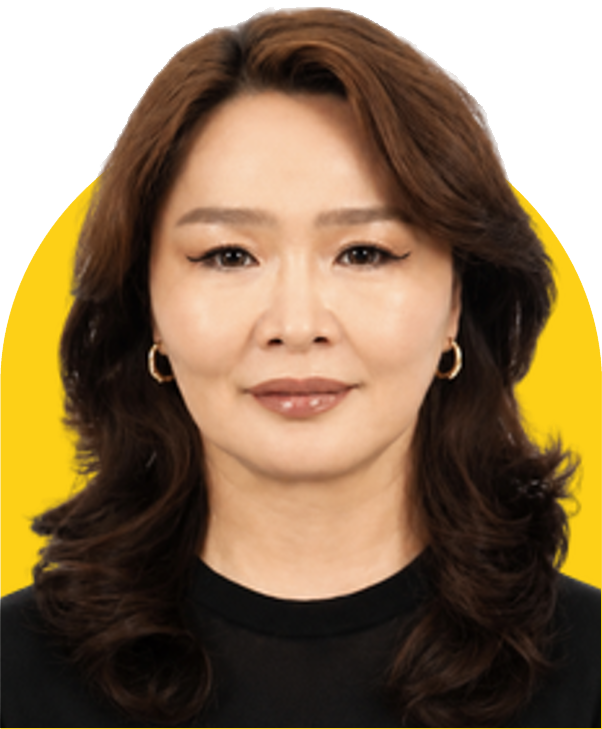
03 / 07 · Session 1
Growing Women Leaders for a Changing World
Family · Women’s Rights · Human Resource Development · Women’s Leadership · Organizational Development · International Cooperation · Private Diplomacy
“When the roots are strong, the branches flourish.”
Excellencies, Distinguished Delegates, Ladies and Gentlemen, warm greetings from Mongolia. We are living in an age where humanity possesses more knowledge than ever before, yet has never needed trust more deeply. War, climate change, and the age of AI remind us of one profound truth: Peace is not sustained by agreements alone. It is sustained by the trust we build between people.
For this reason, women’s leadership is far more than a matter of representation. It is the foundation upon which peaceful, resilient, and hopeful societies are built, beginning in the family, growing within communities, and ultimately shaping our shared world.
Today, it is my great honor to represent BÖRTE Family & Women’s Academy, Mongolia’s first national institution dedicated to family and women’s leadership, established under the initiative of the Prime Minister of Mongolia, N. Uchral.
Our Academy bears the name of Börte Üjin, one of the most remarkable women in Mongolian history. Börte was not remembered merely as the Great Queen of Chinggis Khan. She was a visionary strategist who helped stabilize a nation, protected the values that held families together, and nurtured the leaders of the next generation.
A New Era Calls for New Leadership
We are living through an unprecedented transformation. AI is reshaping the world of work. Climate change is reshaping our planet. Conflict is testing the bonds of human trust. Demographic shifts are redefining families and communities. For decades, we measured women’s progress by participation. Today, participation alone is no longer enough. We must build leadership ecosystems.
In Mongolia, we have a saying: “When the roots are strong, the branches flourish.” Just as a tree without deep roots cannot withstand the storm, leadership without values cannot withstand the challenges of our time.
True leadership grows from five living foundations: purpose rooted in values; inner confidence; intergenerational mentorship; institutions that create opportunities; and communities built upon mutual trust. Our greatest challenge is not the absence of talented women. It is ensuring that these foundations become lasting systems.
The Most Precious Quality That Cannot Be Fully Taught
People often ask me, “What is the one leadership quality that education alone cannot fully cultivate?” My answer is always the same. Inner courage. Skills can be taught. Knowledge can be transferred. Technology can be learned. But the courage to protect human dignity, create hope amid uncertainty, and make difficult decisions when no perfect answer exists grows only through lived experience, shared values, and intergenerational mentorship.
There is an old Mongolian saying: “A person grows through wisdom, and is remembered through courage and perseverance.” Leadership is not authority. Leadership is a lifelong commitment to carrying forward the wisdom entrusted to us by those who came before us while creating lasting value for those who will come after us. In the end, we are not remembered for the titles we held. We are remembered for whom we trusted, whom we inspired, and to whom we left peace.
Mongolia’s Contribution: The BÖRTE Model
This conviction became the foundation of BÖRTE Family & Women’s Academy. We often say: “We do not simply deliver training. We build systems.” Throughout my years working in human resource development and organizational transformation, I have witnessed one consistent truth. Training expands knowledge. Systems transform lives.
That is why we never see women merely as participants. We see them as future changemakers who begin transformation within their families and local communities. Our BÖRTE Model consists of five interconnected pillars: family resilience; women’s leadership; AI-enabled learning; intergenerational mentorship; and citizen diplomacy.
In Mongolia’s nomadic tradition, a child is never raised by one person alone. This culture—where the wisdom of grandparents, the values of mothers, and the responsibility of the community come together as one—offers us a vital lesson. Leadership is not about reaching the summit alone. It is about helping others rise, so that shared progress endures across generations. This is not only Mongolia’s experience. It is a model we can build together.
A New Partnership for Peace
Peace is not simply the absence of war. Peace is the presence of trust. Today, we face an important choice. Will future international cooperation be measured only by agreements between governments? Or will it also be measured by the trust built between people? I chose the second path.
We need a new era of Citizen Diplomacy. We need a women’s leadership network connected across borders. We need young leaders who learn, innovate, and solve challenges together through AI.
In Mongolia, we have long believed: “Harmony within the family spreads into society. Harmony within society spreads across the world.” That is why I believe peace does not begin at the negotiating table. Peace begins at home.
Three Commitments to Our Shared Future
Today, I respectfully invite this forum to embrace three shared commitments.
First, in Mongolia’s nomadic tradition, a child is never raised by one person alone. This culture—where the wisdom of grandparents, the values of mothers, and the responsibility of the community come together as one—offers us a vital lesson. Leadership is not about reaching the summit alone. It is about helping others rise, so that shared progress endures across generations. This is not only Mongolia’s experience. It is a model we can build together.
Second, Mongolians have always regarded nature as our ‘Mother Earth.’ We have a cherished teaching: “We may leave footprints upon the Earth, but we must never leave scars upon nature.” This is not just a tradition. It is a way of life. Across Mongolia, elders teach children to honor mountains, rivers, springs, and grasslands through everyday practice. For me, mentorship is not merely a transfer of knowledge. It is the passing of a culture that teaches us how to live in harmony—with one another and with the Earth itself.
Third, Artificial Intelligence represents a historic opportunity when guided by wisdom. When misused, it risks creating new forms of inequality. We do not see AI as a tool that replaces people. We see it as a bridge—connecting women in Mongolia’s remote communities with global knowledge, mentorship, and opportunity. Because the future of technology will ultimately be shaped not by algorithms alone, but by our humanity.
In Mongolia, there is a beautiful saying: “Those who are meant to meet will always find one another.” Perhaps we did not gather in this room by coincidence. We came here because we share a responsibility—to protect our Earth and to pass peace forward to future generations.
So today, let us do more than exchange words. Let us build meaningful partnerships. Let us create lasting change. Let us shape our common future together. The words spoken in this room may one day fade. But the trust we build today can continue to live in the lives of those who come after us. When women lead together, the world does not become divided. It becomes more compassionate. More resilient. More peaceful.
The work we undertake today is not only for our generation. It is for the future in which our children will simply say, “Thank you.” The philosophy of BÖRTE Academy can be expressed in a single sentence: “We do not simply deliver training. We build a value-based system of intergenerational peace leadership.”
Thank you.
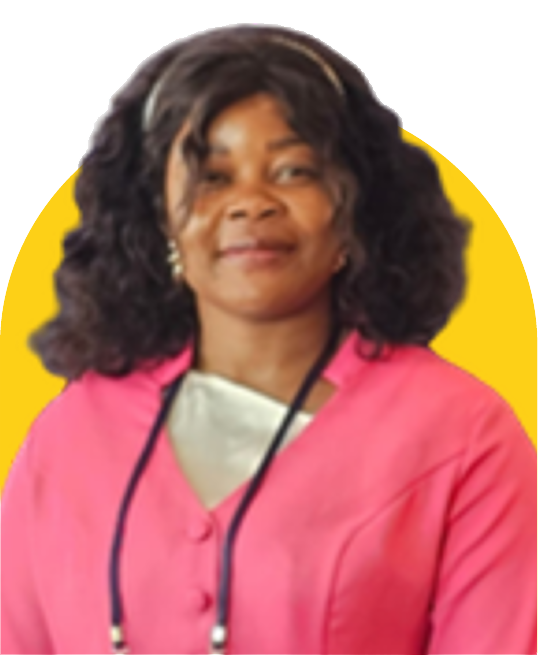
01 / 02 · Session 2
Women Leading Everyday Peace in Communities
Community Development · Women’s Leadership · Climate · Women’s Empowerment · Gender Equality · Girls
“Peace is not distant.”
My name is Achiri Constance Amboh. Founder of HAND IN HAND Cameroon, and by training an Engineer in Town Planning with the Ministry of Housing and Urban Development in Cameroon. I am honored to speak on a subject close to my heart: Women Leading Everyday Peace in Communities, created through women’s leadership.
I have come to understand that peace begins within us, it is not just the absence of war, or only signed in agreements or declared in halls. Rather, I have understood that peace is built every day, at home and in the society, when people feel included, when dignity is protected, when people have access to opportunity, when they trust their government and one another, when dialogue helps us agree, and when young people and women can participate in the decisions that affect their communities and their lives.
A Story of Struggle
Let me begin with the experiences that shaped my own journey toward empowerment, community development, and peacebuilding.
I was born and raised in a village called Zem Njinibi, North West Region of Cameroon, by a single mother. As a young girl, I was absorbed into peasant farming and hunting simply to survive. That was the only way I could help my grandparents and mother to care for me. I grew up lacking basic needs and things as simple as menstrual pads and clothes at the age of puberty. I never knew how wearing a new cloth or shoe felt like. In fact, having something new was a luxury I rarely knew.
My mother gave her very best. She died struggling as a tomato hawker, working to keep us alive. But out of that struggle rose a heroine. My aunty emerged as the one empowered woman in our house. She managed through part time education and ended up as a nurse. From her job, she supported and shouldered the family’s responsibilities. She became my idol.
When she spoke, everyone listened, and she influenced the decisions in the family. She started by supporting me in school, became our peacemaker, uniting brothers when there is a quarrel that could eventually lead to division in the house, and because of her advice, many in our family were able to make investments that changed their future. She earned her respect because she chose to educate herself, learn a skill and earn a good job. This is what empowerment can do. When women become empowered, they gain decision making power, dignity is protected, and can build peace and support other women to rise. (The story is long but let’s leave it for another day.)
What Society Showed Me Became My Turning Point
As I grew up to adulthood, I saw diverse forms of power struggles within homes and media reports of femicide and gender based violence that led to alarming levels of violent cases recorded against women, all linked to weak economic standing and lack of women’s empowerment.
I saw community problems like waste management, which could be solved easily by women, because they are the first to come in contact with waste while cooking, shopping, packaging or doing laundry. This shaped my professional journey as a Town Planner, connecting gender and community development.
I saw women abandoned with their children, leaving many of those children as school dropouts, with these women being the only hope for their children. Holding the responsibility of supporting the next generation and saving the future and society from nuisance.
I saw that weak financial power and a lack of education placed women at a profound disadvantage. Exposed to violence, without a voice at home, unable to contribute to development, and with limited access to opportunity. How can society be peaceful when faced with such situations?
This contrast, between what one empowered woman could achieve in my own family, and what so many unempowered women are suffering around me — that was the turning point of my life’s work.
Raising Hope through HAND IN HAND Cameroon
This is why I founded HAND IN HAND Cameroon. I have seen, and I believe deeply, that women can better contribute to the growth of their families when they become empowered. Empowered women influence decision-making, they head community initiatives, they feel included, and their dignity is protected. This leads to peace at home, and it raises stable families.
The lesson I have learned is simple but powerful: by creating a safe space for women, and by supporting girls’ education, we help young girls and women build both a network and the confidence to engage with the issues that shape policies on women’s rights, education, and equality. In this way, they become active agents of change, not just beneficiaries of it. In doing so, they fan the flame of peace within their communities.
The Way Forward
So, how can women’s leadership create more peaceful and resilient communities? I offer four paths forward, drawn directly from what I have lived and witnessed:
First, successful women must lead peaceful initiatives, showing by example that change is possible. Second, these women must inspire others to contribute, so that leadership multiplies rather than remaining isolated. Third, we must create spaces for dialogue, because peace is negotiated in conversation before it is ever declared in policy — this begins at home. And fourth, we must mentor girls and young women, so that the next generation inherits not our struggles, but our strength.
Closing
My aunty taught me, without ever calling it leadership, that one empowered woman can hold a family together. If women could multiply and amplify the actions of my aunt beginning from their homes, to their villages, towns, and all nations represented in this room, we will be proud to see the outcomes of how women’s leadership can hold a community, society and a country together.
Peace is not distant. It is built every day, in homes like the one I grew up in, through the courage of women, and through the work we choose to do together, hand in hand. Let’s engage everyday peace. Let’s build peace together. Thank you.
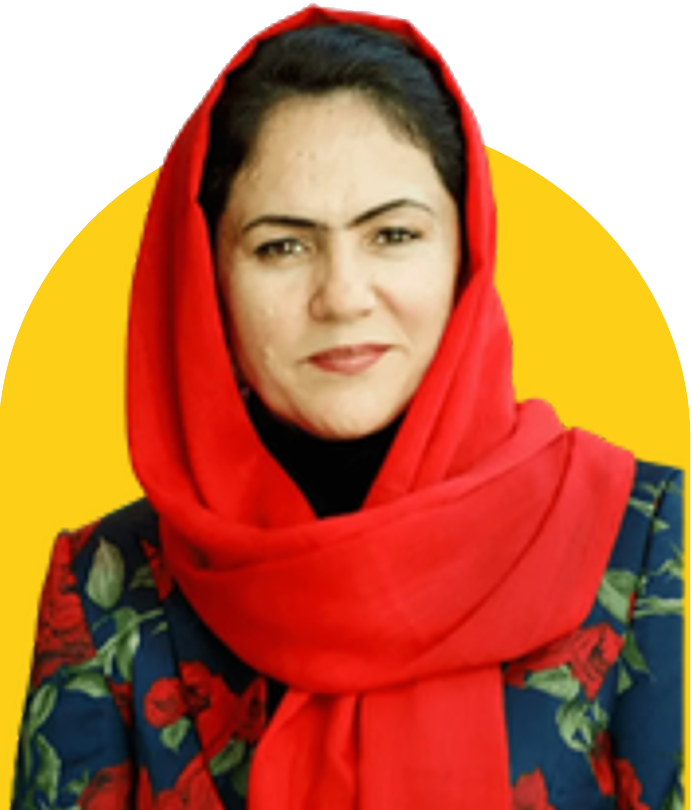
02 / 02 · Session 2
Keeping Hope Alive: Women’s Resilience and Everyday Peace Amid Conflict
Restoration · Care · Women’s Agency · Peacebuilding · Solidarity
“Women are not only victims of conflict; we are agents of peace.”
Although women have not initiated wars, conflicts and wars have affected women and children to a large extent; not only do they lose their loved ones, but in the last five decades, war has left 2.5 million war widows in Afghanistan. Opportunities and rights are stripped away from them; that is why their meaningful inclusion and participation in peacebuilding, including official and track-two negotiations, is important.
Sometimes tokenistic inclusion of women can be harmful; ticking the box is not inclusion. Once they are included, they must not be sidelined to discussions only around women’s rights; they need to have a say on every matter related to the peace agreement, finance, security, political structure, etc.
My engagement in the peace negotiations with the Taliban taught me that women must have a seat at the table. Having a seat at the table doesn’t mean women’s voices are heard; it is the first step towards women’s participation. We all know and agree that decisions about peace cannot be sustainable when half of society is excluded from shaping them.
In Afghanistan, we started promoting women’s inclusion in peace talks with the Taliban since 2015. The government then developed the 1325 action plan; we mobilized CSOs, media, and political leaders to ensure women are in the process and that their traditional role in Afghanistan in peacebuilding is considered. It was not an easy exercise, and it will never be easy to secure a seat at the table.
Women’s leadership is not an addition to peacebuilding—it should be part of and essential to it. When women participate meaningfully, peace processes have a better chance of reflecting the needs of the whole society.
Peace is more than the absence of fighting. For women and victims of war, silencing guns without ensuring their rights are preserved gives them no guarantee in the agreement that they will be included in decision-making and that they have a life with dignity, rights, opportunity, safety, and the ability to participate fully in society.
Negative peace is the case of Afghanistan, where the Taliban claim that they brought security; however, security without participation in socio-political life looks like a graveyard, as some women in Afghanistan tell me.
My message today is simple: “Injustice anywhere could be injustice everywhere.” Today the situation of women in Afghanistan is a testimony to the global community on how the WPS agenda has failed the women of Afghanistan. In order for them to regain their rights and freedom, their dignity, they need to be given the space so that they build peace with their own participation, and include men so a joint future is shaped. This is what we have been doing for the past one year, but sadly the case of Afghan women is not a priority to the world; it is extremely challenging and hard to even organize some of these dialogues.
My plea to all of you, to the UN, is to support women and girls in Afghanistan as they endure the harshest situation.
If we want to transform conflict, we must transform who gets to shape peace. Women must be at the table, at the decision-making table, and at the table where the future is built.

01 / 02 · Session 3
Women Empowering Future Generations: Building Resilient Families and Communities
Child Protection · Gender Equality · Social Protection · Community Resilience · Empowerment of Women and Families
“When women lead, the understanding of security expands.”
President of the International Women’s Peace Group, Ms. Na-young Jeon, Distinguished Delegates, Esteemed Women Leaders, Ladies and Gentlemen, it is a great honor to represent the Republic of Kenya at this important gathering. I bring you warm greetings from the Ministry of Gender, Culture and Children Services and from the people of Kenya.
Across every society, women are the first peacebuilders. They are the first teachers, the first protectors, and often the first responders when families face crisis. When women are empowered, families become stronger. When families are stronger, communities become resilient. And when communities are resilient, nations become peaceful. This simple truth reminds us that sustainable peace begins not in institutions alone, but in homes, families, and communities.
We cannot discuss the future without discussing the well-being of children. No society can thrive when its children are unsafe or when its women are excluded from leadership and opportunity.
In Kenya, we have learned that child protection is not merely a social responsibility; it is an investment in peace, stability, and sustainable development. When children experience violence, exploitation, harmful practices, or neglect, the consequences are felt far beyond childhood. Such experiences weaken social cohesion and undermine the foundations upon which peaceful societies are built. That is why Kenya has strengthened its commitment to protecting children through constitutional guarantees, the Children Act, 2022, and the National Care Reform Strategy, which promotes family and community-based care. We have also partnered with religious leaders and communities to champion child safeguarding and positive social change.
At the same time, we recognize that laws and policies alone are not enough. Women must be recognized not only as caregivers, but as leaders, innovators, entrepreneurs, educators, and agents of change. Women bring unique perspectives that strengthen decision-making, build social cohesion, and promote inclusive development.
When women lead, the understanding of security expands. It becomes not only about protecting borders, but also about protecting dignity, opportunity, and human well-being. The impact is intergenerational. When a woman is empowered economically, her family becomes more resilient. When a girl is protected from violence and given access to education, she gains the opportunity to reach her full potential and contribute meaningfully to society. Future generations do not inherit peace by chance; they inherit the values, systems, and opportunities that we create today.
To build resilient societies, governments cannot work alone. We need strong partnerships among governments, civil society organizations, faith leaders, communities, and families. In Africa, we often say, “It takes a village to raise a child.” Today, I would add that it takes empowered women, supportive communities, responsive governments, and effective partnerships to raise a peaceful generation.
The role of government is to provide the enabling environment through laws, institutions, services, and social protection programmes. The role of civil society and communities is to provide trust, reach, innovation, and local ownership. Together, these partnerships create protective environments where children can thrive and where women can exercise leadership and influence.
Distinguished delegates, the challenges facing women and children today — including violence, trafficking, online exploitation, displacement, climate-related disasters, and conflict — do not respect national borders. No nation can address them alone. The future generation we seek to protect is not Kenyan, Korean, African, or European alone. It is a shared generation whose hopes and opportunities depend on the choices we make together. We must therefore strengthen international cooperation, share good practices, invest in prevention, and build systems that protect children and empower women everywhere.
As I conclude, allow me to emphasize that peace is not built in conference halls alone. It is built in homes where women are empowered, in schools where children are protected, and in communities where every person is treated with dignity and respect. If we truly seek sustainable peace, our greatest investment must be in people, especially women and children.
Let us commit ourselves to building societies where every girl can dream without fear, every child can grow in safety, and every woman can lead with dignity, because when we empower women, we multiply peace. When we protect children, we safeguard the future. And when we do both together, we create a legacy that will endure for generations.
Asanteni Sana. Thank You. Kamsahamnida.

02 / 02 · Session 3
Youth as Architects of Peace
Global Citizenship Education · Global Curricula · Civic Participation · Experiential Education
“Mutual respect. Shared humanity. Collective responsibility. Cultural humility.”
Thank you for the invitation and opportunity to speak to you today. I am going to talk about an idea called “the beloved community,” and how it can guide us as we seek to build a peaceful community for our shared future. I am drawing on the work that has been done in global learning, my primary field, and from theology. It is important now to reconsider the way forward through a beloved community at this time of deep division and mistrust, both across nations and within them.
I am not a theologian. But three theologians have shaped the concept of a beloved community, which has been adapted to broader contexts.
Our first voice is Josiah Royce, a philosophy professor at Harvard, who first used the term in 1913. He said the beloved community is one where individuals express love and devotion, not only to their own community, but to everyone. He described this as coming from an individual transformation based on God’s love — though the idea itself reaches beyond any one faith. This transformation contributes to a community rooted in shared humanity, where we value all members.
Our second voice is theologian Howard Thurman, who drew on Royce’s work. He was a philosopher, educator, and preacher who served as Dean of Chapels, the senior religious and spiritual leader, at Howard University and Boston University, and spent time with Gandhi in India to develop his understanding of nonviolence as part of the beloved community. This is where the beloved community becomes a peace practice, not just an ideal. Thurman argued that each of us carries a collective responsibility to build this community; it is not someone else’s job. We all play a role. He named three things we need: integration, truly working together, not just standing side by side; harmony, made richer, not weaker, by our differences; and human dignity at the center of everything.
Thurman’s work also influenced our third voice, Rev. Dr. Martin Luther King, Jr. Dr. King himself never offered a single definition of the beloved community. Still, across his speeches, he provided a framework: a community that welcomes everyone, regardless of race, gender, class, or background. A community where conflict ends not in bitterness, but in reconciliation and a new relationship between people who once stood on opposite sides, which is what peacemaking looks like in practice. King said, “Our goal is to create a beloved community, and this will require a qualitative change in our souls as well as a quantitative change in our lives.”
Our fourth voice is American scholar bell hooks, who contributed a more contemporary lens to the framing of the beloved community. She argued that we need a radical openness where everyone knows they belong. That takes mutual respect. It takes cultural humility, the willingness to say, “My way of belonging is not the only way.” She also wrote that community is not a place without conflict. It is the commitment to each other that pushes us to resolve conflict when it comes. She also said that being a “citizen” should not mean becoming like one dominant model, it should be open to many different ways of belonging.
So, how do we build a beloved community to prepare students for this shared future? It is connected to peacemaking and peacebuilding, which are not personality traits. They involve a set of skills we can teach: mutual respect, shared humanity, collective responsibility, and cultural humility.
This can only happen in collaboration with civil society and community organizations, both corporate and non-profit. Students must have sustained, meaningful engagement with leaders and practitioners in women’s leadership, peace education, and other local, national, and international organizations. In the field of global learning, we have found that students have attained these four essential peacemaking skills through intentional experiences in the community — through internships, community-based projects, service learning, research, and other opportunities to address real world challenges in partnership with practitioners.
Through these types of experiences, students have opportunities to engage in activities, programs, and experiences where they navigate collaboration and work across differences and commit to mutual respect in their interactions. That means, for example, meeting an individual’s unfamiliar custom with a question instead of a judgment, approaching each other with curiosity rather than suspicion. These skills are essential for workplace readiness and for preparing the next generation of peacemakers and peace builders. This cannot happen only in classrooms.
Students must have the opportunity to engage outside their institutions directly with community members, civil servants, and others. Through these experiences, students learn that solidarity, not division, is what carries us into our shared future. But we must make sure that we provide students with opportunities to practice and perfect these skills in their beloved communities.
I will close with two voices. Martin Luther King Jr. described the beloved community as one where people are seen first as individuals, with unique life experiences, who are brought together for the common good. And bell hooks wrote: “Those of us working for change must first become a beloved community among ourselves, as we strive for all of society to become one too.”
Mutual respect. Shared humanity. Collective responsibility. Cultural humility. That is how we build the beloved community that we need right now.